Nagaland Tribes: The 17 Major Tribes and Their Traditions
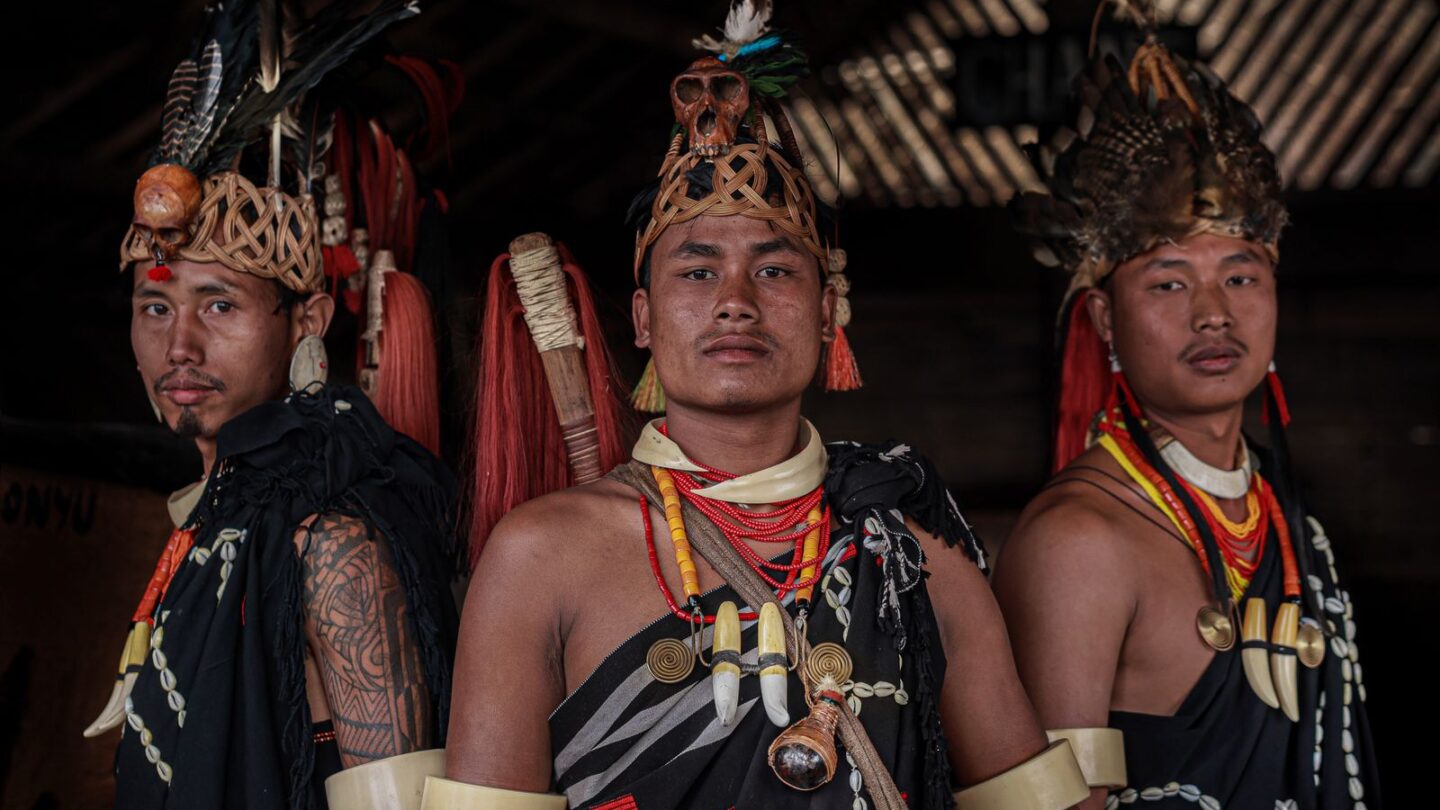
The Nagaland tribes number 17 major recognised tribes, according to the Government of Nagaland. They are the Angami, Ao, Chakhesang, Chang, Kachari, Khiamniungan, Konyak, Kuki, Lotha, Phom, Pochury, Rengma, Sangtam, Sumi, Tikhir, Yimkhiung and Zeliang. Each has its own language, dress, festivals and customary law. Moreover, many sub-tribes and clans exist within these groups.
Scheduled Tribes made up about 86.5% of Nagaland’s population in the 2011 Census. The state has 17 districts, and most tribes have a clear home area, although people now live across the state. Consequently, festivals, morungs and shawls remain the easiest ways for visitors to understand the differences between communities.
Key takeaways
- Nagaland officially recognises 17 major tribes, including the Kachari and Kuki.
- The Tikhir became the newest recognised Naga tribe in January 2022.
- Konyak, Ao, Sumi, Lotha and Angami are among the largest communities.
- Each tribe keeps its own festival cycle, such as Sekrenyi, Moatsu, Aoleang and Tuluni.
- The Hornbill Festival at Kisama brings all Nagaland tribes together every December.
Nagaland tribes at a glance
| Detail | Information |
|---|---|
| Recognised major tribes | 17 |
| Newest recognised tribe | Tikhir (notified January 2022) |
| Districts | 17 (Meluri became the 17th in November 2024) |
| Scheduled Tribe share | About 86.5% (Census 2011) |
| Official language | English |
| Common link language | Nagamese |
| Main religion | Christianity, about 88% (Census 2011) |
| Traditional institution | Morung (youth dormitory and meeting house) |
| Shared festival | Hornbill Festival, 1 to 10 December, Kisama |
| Statehood | 1 December 1963 |
The 17 major Nagaland tribes and their districts
The table lists each tribe with its main home district and best-known festival. However, festival dates can shift by a day or two between villages and years. Therefore, confirm with the district administration or Nagaland Tourism before planning a visit.
| Tribe | Main district or area | Key festival | Usual timing |
|---|---|---|---|
| Angami | Kohima | Sekrenyi | 25 to 27 February |
| Ao | Mokokchung | Moatsu | 1 to 3 May |
| Chakhesang | Phek | Sukrunye and Tsukhenye | January and April |
| Chang | Tuensang | Naknyulem | Late July |
| Kachari | Dimapur | Bushu | Late January |
| Khiamniungan | Noklak | Tsokum | Early October |
| Konyak | Mon | Aoleang | 1 to 6 April |
| Kuki | Peren and foothill areas | Mim Kut and Chavang Kut | 17 January and 1 November |
| Lotha | Wokha | Tokhu Emong | 7 November |
| Phom | Longleng | Monyu | 1 to 6 April |
| Pochury | Meluri | Yemshe | Early October |
| Rengma | Tseminyu | Ngada | 27 to 28 November |
| Sangtam | Kiphire and Tuensang | Mungmung | Early September |
| Sumi | Zunheboto | Tuluni | 8 July |
| Tikhir | Shamator and Tuensang | Tsonglaknyi | October |
| Yimkhiung | Shamator and Kiphire | Metemneo | August |
| Zeliang | Peren | Chaga Gadi and Hega | October and February |
Tourism Nagaland also features the Garo community and its Wangala festival. However, the Garo are not among the 17 major Nagaland tribes on the state profile.
Major Nagaland tribes profiled
The five largest groups shape much of what visitors see. Additionally, their festivals are the easiest to time a trip around.
Angami
The Angami live mainly in and around Kohima. Their language, Tenyidie, has a strong written tradition. Sekrenyi, a purification festival in February, marks a new cycle and the passage of young men into adulthood. Furthermore, Angami villages such as Khonoma are known for terraced rice fields and conservation work.
Ao
The Ao heartland is Mokokchung district. The Ao were among the first Nagaland tribes to adopt Christianity, through American Baptist missionaries in the 1870s. Moatsu, in early May, follows the sowing season with feasts, songs and games. Similarly, Tsungremmong in August marks the pre-harvest period.
Konyak
The Konyak live mostly in Mon district and also in parts of Arunachal Pradesh, Assam and Myanmar. In the 2011 Census, Konyak had the most mother-tongue speakers of any Naga language. Hereditary chiefs called Anghs lead many Konyak villages. Moreover, the tribe is known for facial tattoos, brasswork and the spring festival Aoleang.
Sumi
The Sumi, also called Sema, centre on Zunheboto district. Tuluni in July is a festival of plenty, while Ahuna in November celebrates the new harvest. The Sumi word axone is now used across India for fermented soybean. Our guide to axone explains how it is made and used.
Lotha
The Lotha live mainly in Wokha district. Tokhu Emong, held around 7 November, is a post-harvest thanksgiving that stresses reconciliation. The village chief traditionally opens the festival. Meanwhile, Wokha is also famous for the Amur falcon roost at Doyang reservoir each autumn.
Smaller and eastern Nagaland tribes
Eastern Nagaland holds several tribes whose homelands lie in Tuensang, Mon, Longleng, Kiphire, Noklak and Shamator districts. As a result, these areas have a distinct cultural identity within the state.
- Chang: based in Tuensang; Naknyulem celebrates the victory of light over darkness over three days.
- Phom: based in Longleng; Monyu in early April follows the sowing season.
- Khiamniungan: based in Noklak on the Myanmar border; Tsokum is a harvest festival.
- Sangtam: based in Kiphire and Tuensang; Mungmung in September means togetherness.
- Yimkhiung: spread across Shamator, Kiphire and nearby areas; Metemneo marks the harvest.
- Tikhir: recognised as a separate tribe in 2022; Tsonglaknyi honours the warrior’s shield.
Additionally, western and southern districts hold the Chakhesang of Phek, the Pochury of Meluri, the Rengma of Tseminyu and the Zeliang of Peren. The Zeliang name combines the Zeme and Liangmai peoples. Similarly, the Chakhesang name joins the Chakhru, Khezha and Sangtam elements.
Kachari and Kuki: the non-Naga Nagaland tribes
Two of the 17 recognised tribes are not Naga. The Kachari, also called Dimasa, have deep roots in the Dimapur area. The old Kachari capital ruins at Dimapur, with their mushroom-shaped pillars, remain a well-known landmark. Their main festival is Bushu, held after the harvest in late January.
The Kuki live mainly in the foothill areas of Peren and nearby districts. Their post-harvest festivals are Mim Kut in January and Chavang Kut in November. Consequently, the full list of Nagaland tribes covers more than the Naga peoples alone.
Festival calendar of Nagaland tribes
Most festivals follow the farming year. Spring festivals come after sowing, while autumn ones give thanks for the harvest. The month-by-month view below helps travellers plan around them.
| Month | Festivals | Tribe |
|---|---|---|
| January | Bushu, Mim Kut, Sukrunye, Tsungkamnyo | Kachari, Kuki, Chakhesang, Yimkhiung |
| February | Sekrenyi, Hega | Angami, Zeliang |
| April | Aoleang, Monyu, Tsukhenye | Konyak, Phom, Chakhesang |
| May | Moatsu | Ao |
| July | Tuluni, Naknyulem | Sumi, Chang |
| August | Tsungremmong, Metemneo | Ao, Yimkhiung |
| September | Mungmung | Sangtam |
| October | Tsokum, Yemshe, Tsonglaknyi, Chaga Gadi | Khiamniungan, Pochury, Tikhir, Zeliang |
| November | Tokhu Emong, Ngada, Ahuna, Chavang Kut | Lotha, Rengma, Sumi, Kuki |
| December | Hornbill Festival | All tribes |
For weather, road conditions and crowd levels in each month, read our guide to the best time to visit Northeast India.
Morungs and village life among Nagaland tribes
The morung was the heart of the traditional Naga village. It served as a dormitory for young men, a school and a guard post. In addition, elders met there to settle disputes and plan community work. Young people learned songs, crafts, history and discipline inside it.
Each tribe used its own name for the institution. The Ao call it the arichu, the Angami the kichuki and the Lotha the champo. Some tribes also kept separate dormitories for girls.
Formal schools and Christianity reduced the morung’s role during the 20th century. However, many villages still keep a morung as a cultural and ceremonial space. At Kisama Heritage Village, each major tribe has built its own morung in its traditional style.
| Tribe | Morung name | Notes |
|---|---|---|
| Ao | Arichu or ariju | Girls had a separate dormitory called tsuki |
| Angami | Kichuki | Traditional dormitory for young men |
| Lotha | Champo | Centre for training young men |
| Konyak | Baan | Historically displayed war trophies |
Headhunting in history
Headhunting was once part of warfare among many Nagaland tribes and neighbouring peoples. A warrior’s status, and among the Konyak his facial tattoos, came from success in raids. The practice was tied to beliefs about fertility and protection of the village.
British administrators began to curb raids in the late 19th century. Meanwhile, Christianity spread quickly through the 20th century and changed social values. Reports say the Indian government banned headhunting in 1960, although it lingered briefly in remote areas. Today, it survives only as history, in songs, carvings and the memories of elderly tattooed men.
Visitors should treat this part of the history of Nagaland tribes with respect. Therefore, ask before photographing elders, and avoid calling communities “headhunters” as a label.
Shawls, dress and crafts
Traditional dress is one of the clearest markers among Nagaland tribes. Each tribe, and often each clan, has shawls with specific colours and patterns. Historically, some designs were reserved for warriors or for men who had hosted feasts of merit.
The Chakhesang shawl received a Geographical Indication (GI) tag in 2017, the first for a Nagaland handicraft. Similarly, the Ao tsungkotepsu shawl is known for its bold motifs. Other crafts include bamboo and cane work, wood carving, beadwork and hornbill-feather headgear.
- Where to buy: Kohima and Dimapur markets, state emporiums and craft stalls at the Hornbill Festival.
- What to check: handloom shawls cost more than machine copies, so ask about the weaving method.
- Etiquette: some patterns carry clan meaning, so ask before wearing one ceremonially.
Languages of the Nagaland tribes
Nagaland has many languages, and most tribes speak their own. Furthermore, several tribes include sub-groups with distinct dialects. English is the official language, adopted in 1967. Meanwhile, Nagamese, a creole based on Assamese, works as the common link language in markets and towns.
| Tribe | Main language or languages |
|---|---|
| Angami | Tenyidie |
| Ao | Ao, with Chungli and Mongsen varieties |
| Chakhesang | Chokri and Khezha |
| Kachari | Dimasa |
| Zeliang | Zeme and Liangmai |
| Others | A language named after the tribe, such as Konyak, Lotha or Sumi |
Visiting Nagaland tribes respectfully
Domestic tourists need an Inner Line Permit to enter Nagaland. The tourist ILP costs ₹200 and is valid for 30 days. Our Nagaland ILP guide explains the online steps. Foreign nationals face Protected Area Permit rules, so check the latest position before booking.
- Seek permission from the village council or a local guide before entering a village.
- Ask before taking photographs, especially of elders and rituals.
- Dress modestly and follow church-going Sunday customs in villages.
- Buy crafts directly from weavers and cooperatives where possible.
- Respect community land and forest rules, which are set under customary law.
Hornbill Festival: all Nagaland tribes in one place
The state government started the Hornbill Festival in December 2000. It runs every year from 1 to 10 December at Kisama, about 12 km from Kohima. Consequently, it is the easiest way to see all Nagaland tribes in one visit. Each morung hosts dances, food and crafts. Our Hornbill Festival guide covers tickets, stays and transport.
Frequently asked questions
How many tribes are there in Nagaland?
Nagaland has 17 major recognised tribes, according to the state government. They are the Angami, Ao, Chakhesang, Chang, Kachari, Khiamniungan, Konyak, Kuki, Lotha, Phom, Pochury, Rengma, Sangtam, Sumi, Tikhir, Yimkhiung and Zeliang. Older books often say 16, because the Tikhir were recognised as a separate tribe only in January 2022.
Which is the largest tribe in Nagaland?
The Konyak are usually described as the largest of the Nagaland tribes. In the 2011 Census, Konyak had the most mother-tongue speakers of any Naga language, followed by Ao. The Sumi, Lotha and Angami are also large communities. Tribe-wise figures differ between sources, so check census tables for exact numbers.
What is the main festival of the Angami tribe?
Sekrenyi is the main Angami festival. It usually falls from 25 to 27 February and marks purification and renewal. Young men take a ritual bath at the village well, and families feast and sing. The Angami homeland lies around Kohima, so the festival is easy to combine with a visit to the capital.
Which Nagaland tribes are not Naga?
The Kachari and the Kuki are recognised tribes of Nagaland but are not Naga peoples. The Kachari, also called Dimasa, live mainly around Dimapur and celebrate Bushu. The Kuki live mainly in the foothills of Peren and nearby areas. Their main festivals are Mim Kut in January and Chavang Kut in November.
What is a morung in Nagaland?
A morung is a traditional village institution of the Naga peoples. It served as a dormitory for young men, a place of learning and a guard post. Elders also met there to discuss village matters. Schools and Christianity reduced its role, but many villages still keep morungs for cultural events and ceremonies.
Do Nagaland tribes still practise headhunting?
No. Headhunting ended decades ago. British rule curbed raids, Christianity changed social values, and the Indian government reportedly banned the practice in 1960. Today, it exists only in history, oral tradition and the tattoos of a few elderly Konyak men. Visitors should discuss the subject respectfully and avoid using it as a label.
When is the best time to see tribal festivals in Nagaland?
Early December is the best time, because the Hornbill Festival at Kisama runs from 1 to 10 December and features every major tribe. For village festivals, February brings Sekrenyi, April brings Aoleang and Monyu, and May brings Moatsu. Dates can shift slightly, so confirm locally before you travel.
Understanding the diversity of Nagaland tribes
The 17 Nagaland tribes share a history of village republics, morungs and farming festivals. Yet each keeps its own language, dress and calendar. Time a trip around a village festival or the Hornbill Festival, travel with a local guide, and approach every community with respect. For a wider view of the region, see our overview of the Seven Sisters of India.
Explore more culture guides in Festivals and Culture or visit the Frontier News homepage.
Related guides
More in Festivals & Culture →
Festivals & Culture
Muga Silk: Assam’s Golden Silk, GI Tag, Price and Care
Festivals & Culture
Nongkrem Dance: Khasi Harvest Festival Guide and 2026 Dates
Festivals & Culture