Kisama Heritage Village: Complete Guide to the Hornbill Festival Venue
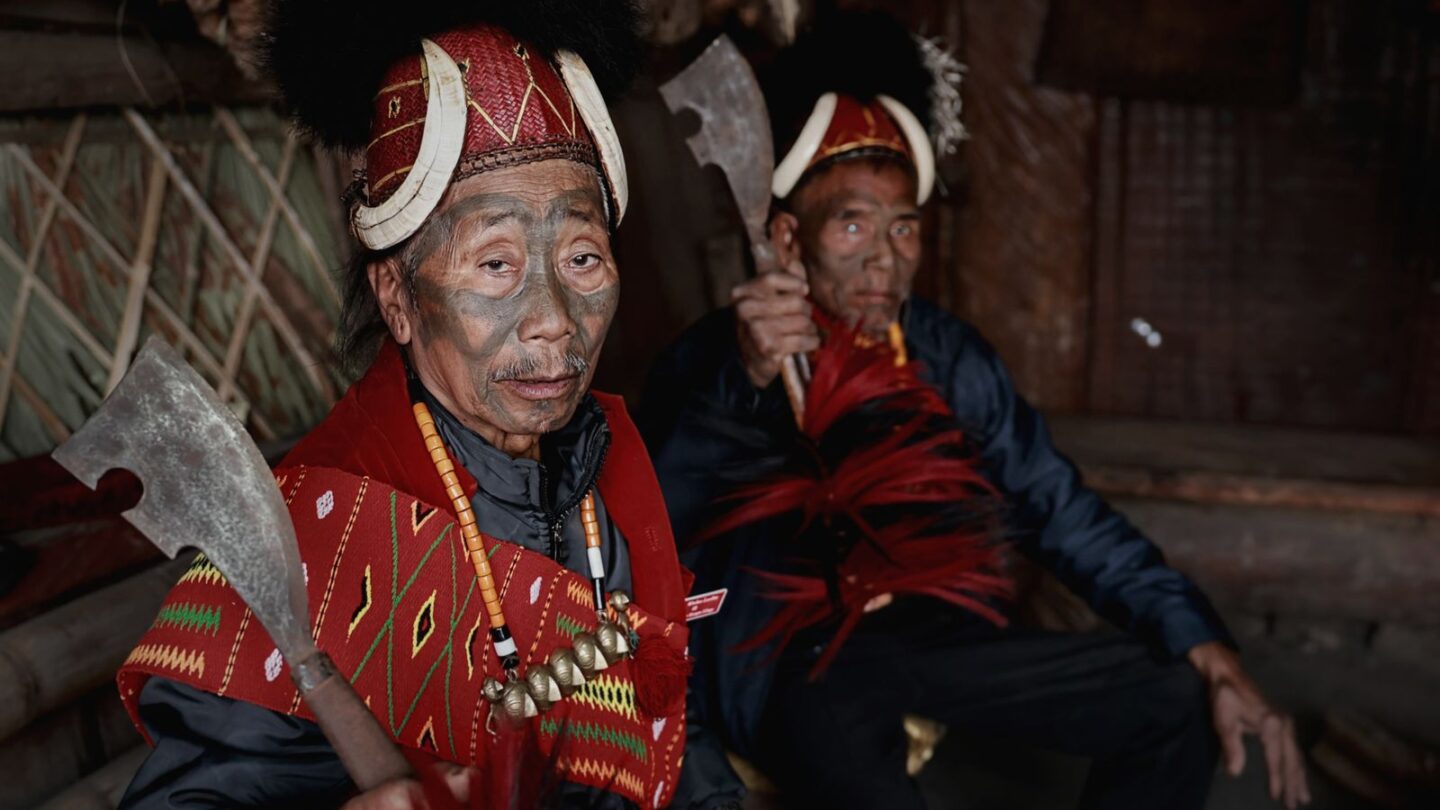
Kisama Heritage Village is a cultural complex about 12 km south of Kohima in Nagaland. It recreates traditional Naga village life, with morungs (communal houses) built by the state’s major tribes. Every December, it hosts the famous Hornbill Festival. For the rest of the year, it works as a living museum where visitors can explore Naga architecture, crafts and history.
The name Kisama combines two neighbouring Angami villages: Kigwema and Phesama, which gave land for the site. This guide covers what to see, how to get there, where to stay and how to plan a visit both during and outside the festival.
Key takeaways
- Kisama Heritage Village is about 12 km from Kohima on the Kohima–Imphal highway.
- It houses traditional morungs representing Nagaland’s major tribes.
- A Second World War museum on the grounds recalls the 1944 Battle of Kohima.
- The site hosts the Hornbill Festival every year from 1 to 10 December.
- Indian visitors need a Nagaland inner line permit to enter the state.
Kisama Heritage Village at a glance
| Detail | Information |
|---|---|
| Location | Near Kigwema and Phesama villages, Kohima district |
| Distance from Kohima | About 12 km |
| Main features | Tribal morungs, arena, WWII museum, craft and food stalls |
| Best known for | Hornbill Festival (1–10 December) |
| Nearest airport and railway | Dimapur |
| Permit | Nagaland ILP for Indian visitors |
What is Kisama Heritage Village?
The Nagaland government developed Kisama as a permanent home for the state’s cultural heritage. It opened in the early 2000s, soon after the first Hornbill Festival in 2000.
The complex spreads across a hillside. Paths connect the morungs of different tribes, each built in its own traditional style. As a result, walking through Kisama feels like a short journey across Nagaland.
The morungs: Naga tribal houses
A morung is a traditional dormitory and meeting house. In the past, young men lived there to learn skills, warfare, customs and oral history. Morungs were the centre of village education and defence.
At Kisama Heritage Village, each major tribe has built its own morung. The designs differ in roof shape, carvings and materials. Look out for:
- Carved wooden pillars showing hornbills, mithun heads and warriors
- Log drums used to send signals and mark ceremonies
- Buffalo and mithun skulls, traditionally a sign of wealth and feasts of merit
- Bamboo and thatch work that varies from tribe to tribe
Nagaland has many tribes, including the Angami, Ao, Sumi, Lotha, Konyak, Chakhesang, Chang, Phom, Sangtam, Yimkhiung, Khiamniungan, Pochury, Rengma and Zeliang, among others. Visiting the morungs is a simple way to see how their traditions differ.
Second World War museum at Kisama
Kisama has a Second World War museum on its grounds. It remembers the Battle of Kohima of 1944, when Allied forces stopped the Japanese advance into India. Displays include photographs, maps, weapons and personal items from the battle.
Additionally, the Kohima War Cemetery in town marks the site of the famous tennis-court fighting. Together, the two sites give strong context for Nagaland’s role in the war.
Kisama during the Hornbill Festival
From 1 to 10 December, Kisama Heritage Village becomes the stage for the Hornbill Festival. The arena hosts dances, songs, war cries and indigenous games. Meanwhile, the morungs fill with craftspeople, cooks and performers.
| Time of day | What usually happens |
|---|---|
| Morning | Gates open, visitors explore morungs and stalls |
| Late morning–afternoon | Cultural performances in the main arena |
| Afternoon | Indigenous games, archery and contests |
| Evening | Crowds head back to Kohima for concerts and night events |
Programmes can change each year. Consequently, check the daily schedule at the venue.
Visiting Kisama outside the festival
Kisama Heritage Village is open outside December too. It is much quieter, so you can explore the morungs slowly and take photos without crowds. However, performances, food stalls and craft markets are usually limited.
A visit of two to three hours is enough to see the main morungs and the museum. Combine it with Khonoma village or Kohima’s war memorials for a full day.
How to reach Kisama Heritage Village
| From | Route | Approximate time |
|---|---|---|
| Kohima | Taxi or shared vehicle on the highway towards Imphal | 30–40 minutes |
| Dimapur | Road to Kohima, then on to Kisama | 3–3.5 hours |
| Guwahati | Train or flight to Dimapur, then by road | Plan a full travel day |
During the festival, extra shared taxis run between Kohima and Kisama. Traffic can be slow, so leave early in the morning.
Where to stay near Kisama
- Kohima: the widest choice of hotels and homestays, 12 km away.
- Kigwema and Jakhama: village homestays within a short distance of the venue, popular during Hornbill.
- Festival camps: temporary tented stays near the venue in December.
For Hornbill dates, book several weeks ahead. Outside December, finding a room in Kohima is much easier.
Permits for visiting Kisama
Indian visitors need a Nagaland inner line permit, which costs ₹200 and is valid for 30 days. Apply online on the official Nagaland ILP portal before travel. Foreign visitors do not need an ILP, but Nagaland falls under the Protected Area Permit regime. The Centre relaxed it for the 2025 Hornbill Festival days, so check the 2026 rules before booking. Our inner line permit guide explains the rules in detail.
Tips for visiting Kisama Heritage Village
- Wear good shoes. The site is on a slope with many steps.
- Carry cash. Digital payments may not always work.
- Ask before photographing people. Many performers are happy to pose, but always ask.
- Dress in layers. Kohima is cool most of the year and cold in December.
- Go early. Mornings are quieter and often clearer.
One-day plan: Kisama, Khonoma and Kohima
| Time | Place | What to do |
|---|---|---|
| 8:00 am | Kohima | Early breakfast and leave for Kisama |
| 9:00 am | Kisama Heritage Village | Walk the morungs and the WWII museum |
| 12:30 pm | Kigwema or Jakhama | Lunch at a local eatery or homestay |
| 2:00 pm | Khonoma | Visit Asia’s first “green village”, terraced fields |
| 5:00 pm | Kohima | War Cemetery and evening in town |
This plan works best outside the festival, when roads are quieter.
Photography and etiquette at Kisama
Kisama Heritage Village is a cultural space, not just a photo spot. A few simple habits make your visit better for everyone.
- Ask first before taking close-up portraits.
- Avoid touching ceremonial objects, skulls or log drums.
- Follow instructions from performers and organisers during rituals.
- Use drones only with permission, as rules can apply during the festival.
- Buy directly from artisans to support local craft.
These small courtesies help keep Kisama welcoming for future visitors.
Frequently asked questions
Where is Kisama Heritage Village?
Kisama Heritage Village is about 12 km south of Kohima, Nagaland, on the highway to Imphal. It sits between Kigwema and Phesama villages.
What does Kisama mean?
The name combines two Angami villages that gave land for the site: Kigwema (“Ki”) and Phesama (“Sama”).
What is a morung?
A morung is a traditional Naga communal house and dormitory. It was once the centre of village learning, defence and ceremonies for young men.
Is Kisama Heritage Village open outside the Hornbill Festival?
Yes. You can visit the morungs and the Second World War museum outside December. However, performances and food stalls are limited.
How far is Kisama from Dimapur?
Kisama is roughly 85 km from Dimapur by road, through Kohima. The drive usually takes around 3 to 3.5 hours.
Do I need an ILP to visit Kisama?
Yes. Indian visitors need a Nagaland inner line permit to enter the state. It costs ₹200 and is valid for 30 days.
Why Kisama deserves more than one visit
Kisama Heritage Village is far more than a festival ground. It is a window into Naga life, history and craft. Visit during the Hornbill Festival for colour and energy, or come in another season for quiet exploration.
Explore more cultural guides in Festivals & Culture, plan your season with our best time to visit Northeast India guide, or return to the homepage.
Related guides
More in Festivals & Culture →
Festivals & Culture
Sangai Festival 2026: Dates, Venues and Highlights in Manipur
Festivals & Culture
Axone: Nagaland’s Fermented Soybean, Dishes and Uses Explained
Festivals & Culture