Eri Silk: The Peace Silk of Assam and Meghalaya, GI Tags and Price
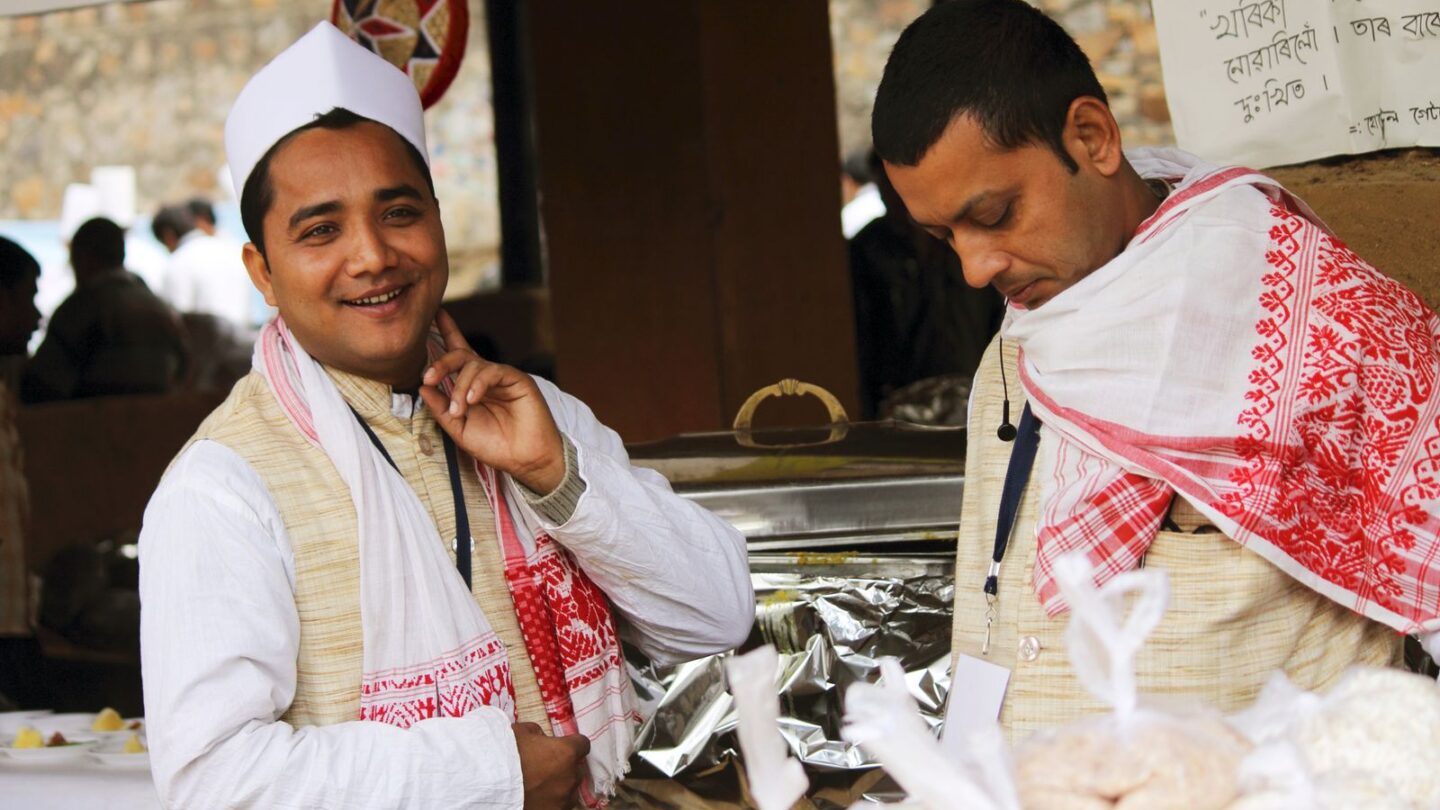
Eri silk is a soft, warm silk spun from the cocoons of the castor-fed silkworm Samia ricini, and it is often called peace silk or ahimsa silk. Its name comes from “era”, the Assamese word for castor. Assam produces about 65% of India’s eri, according to the state sericulture department, and Meghalaya is the next major producer.
Unlike mulberry silk, eri is mostly spun like wool rather than reeled as a long filament. As a result, the cloth feels matte, thick and cosy, which suits shawls and winter wear. Two regional forms now carry Geographical Indication (GI) tags: Bodo Eri Silk from Assam and Meghalaya’s Ryndia.
Key takeaways
- Eri silk comes from Samia ricini, a domesticated silkworm reared indoors on castor and kesseru leaves.
- Cocoons are open at one end, so the moth can leave before the silk is processed.
- India produced about 7,886 tonnes of eri raw silk in 2024–25 and about 7,766 tonnes in 2025–26, per Central Silk Board data.
- Bodo Eri Silk (Assam) received a GI tag in 2024, and Meghalaya Ryndia followed in April 2025.
- Handloom eri shawls and stoles usually start around ₹2,000 to ₹3,000, while embroidered pieces can exceed ₹10,000.
Eri silk at a glance
| Detail | Information |
|---|---|
| Silkworm | Samia ricini (older name Philosamia ricini) |
| Primary host plants | Castor and kesseru |
| Rearing | Indoors, about 4 to 5 crops a year |
| Yarn type | Mostly hand-spun or mill-spun, not reeled |
| Natural colour | Creamy white to brick red |
| Common names | Peace silk, ahimsa silk, endi; Ryndia in Khasi |
| Main producers | Assam (about 65% of India), then Meghalaya |
| India’s output | About 7,766 tonnes of eri raw silk in 2025–26 |
| GI tags | Bodo Eri Silk (2024); Meghalaya Ryndia (2025) |
| Signature items | Shawls, chadars, stoles, jackets, Ryndia wraps |
| Visit | Umden-Diwon Eri Silk Village, Ri-Bhoi, Meghalaya |
What is eri silk?
Eri is one of India’s four commercial silks, alongside mulberry, tasar and muga. Muga, tasar and eri together form the “vanya” or non-mulberry group. However, eri stands apart because the worm is fully domesticated. Families rear it inside their homes, often on bamboo trays.
The silk has a short staple, like cotton or wool. Therefore, spinners twist the fibres into yarn by hand or machine, instead of reeling one long thread. The resulting eri silk yarn traps air, which gives the cloth its warmth and slightly rough, matte feel.
Assam’s sericulture department lists eri rearing in many districts. These include Kamrup, Goalpara, Udalguri, Darrang, Nagaon, Karbi Anglong, Kokrajhar and Dhubri. Meanwhile, Meghalaya’s Ri-Bhoi district has become the best-known eri area for visitors.
Why it is called peace silk
The eri cocoon is open at one end. Consequently, the moth can emerge before the cocoon is processed, unlike most mulberry silk, where the pupa dies inside. This is why many weavers and sellers call eri silk “ahimsa silk” or “peace silk”.
That label needs some nuance. Practice varies between rearers, and not every commercial lot waits for the moth to emerge. Additionally, many rearing households in Assam eat eri pupae as food. Therefore, buyers who want strictly moth-emerged yarn should ask the seller directly.
How eri silk is made
The eri cycle is short and fits around farm work. Rearers in Umden-Diwon describe roughly 45 days from worm to cocoon, with about a month of feeding. The Central Muga Eri Research and Training Institute (CMERTI) says rearers can take 4 to 5 crops a year when leaves are available.
- Egg hatching: eggs usually hatch in about 10 days at 24 to 26°C and high humidity, per CMERTI.
- Feeding: worms eat fresh castor or kesseru leaves on trays inside the house.
- Moulting: the larvae moult four times as they grow.
- Spinning: mature worms spin cocoons over about 3 to 5 days, often in dry leaves or bamboo frames.
- Moth emergence: in peace practice, the moth leaves through the open end.
- Degumming: cocoons are boiled, often with natural alkalis, to soften the gum.
- Spinning yarn: women spin the fibre on a takli (drop spindle) or a spinning wheel.
- Dyeing and weaving: yarn is dyed, then woven on throw-shuttle or fly-shuttle looms.
Host plants
Castor is the main food plant, and it grows easily across the Brahmaputra valley. Kesseru, a perennial tree, is the other primary host. Furthermore, CMERTI lists tapioca, payam, borpat and borkesseru as secondary plants. As a result, eri rearing adapts well to small farms with mixed crops.
| Plant | Botanical name | Role |
|---|---|---|
| Castor | Ricinus communis | Primary host; most widely used |
| Kesseru | Heteropanax fragrans | Primary host; perennial tree |
| Tapioca | Manihot esculenta | Secondary host |
| Payam | Evodia fraxinifolia | Secondary host |
| Borpat | Ailanthus grandis | Secondary host |
| Borkesseru | Ailanthus excelsa | Secondary host |
Eri silk in Assam and Bodoland
Assam is the heartland of eri silk. The state’s sericulture department credits it with about 65% of national eri output and about 95% of muga. In most rural Assamese homes, eri was traditionally a household craft, spun and woven by women for family use.
The Bodo community has a particularly strong eri culture. In the Bodo language, eri silk is “Indi Zi”. The Association of Bodo Traditional Weavers, Kokrajhar, applied for the GI, and EastMojo reported the Bodo Eri Silk tag in early April 2024. Moreover, the Bodoland Territorial Region now runs a Bodoland Sericulture Mission to expand rearing.
Regional reports in 2025 said the mission covered about 44,000 families across more than 1,600 villages. The same reports put BTR raw silk output at about 1,510 tonnes in 2024–25, almost all of it eri. These are regional news figures, so treat them as indicative. Additionally, new spun silk mills in Baksa and Kokrajhar aim to keep more yarn processing inside the region.
Sualkuchi, near Guwahati, is famous for muga and pat. However, many shops there and in Guwahati also sell eri shawls and stoles. For language and community background, see our guide to the languages of Assam.
Eri silk in Meghalaya: Ryndia and Umden
In Khasi, eri silk is called Ryndia, and the castor plant is “rynda”. Khasi, Bhoi and Jaintia women spin and weave it. Traditionally, a Ryndia wrap was a prized garment, worn at weddings and passed down as an heirloom.
Meghalaya’s Department of Textiles supported the GI application with the Meghalaya Ryndia Producers Association. The tag received final approval in November 2024, and the state announced it on 2 April 2025, per The Shillong Times. Later, on 29 June 2025, Prime Minister Narendra Modi praised Meghalaya’s eri silk in the 123rd Mann Ki Baat episode.
The state is also scaling up production. According to The Shillong Times, Meghalaya produces nearly 500 tonnes of eri cocoons a year. In May 2026, the Chief Minister inaugurated the state’s first eri yarn unit at Lumdaitkhla, Bhoirymbong, in Ri-Bhoi. The unit spins about 20 kg of yarn a day.
Natural dyes of Ryndia
Ryndia weavers mostly use natural dyes. Lac gives red, turmeric gives yellow, and a local iron ore gives black or grey. Similarly, onion skins and various leaves and barks produce browns and greens. Consequently, genuine Ryndia shows soft, earthy shades rather than bright synthetic colours.
Visiting the Umden-Diwon Eri Silk Village
Meghalaya declared Umden-Diwon in Ri-Bhoi the state’s first Eri Silk Village in February 2021. The cluster lies about 70 km from Shillong and about 28 km from Nongpoh, according to Meghalaya Tourism. A Design, Innovation and Research Centre, set up in 2022 with NIFT, works with local weavers.
| Detail | Information |
|---|---|
| Location | Umden-Diwon cluster, Ri-Bhoi district, Meghalaya |
| From Shillong | About 70 km |
| From Guwahati airport | About 87 km |
| From Nongpoh | About 28 km |
| Best season | September to May |
| Stay | Traveller’s Nest guest stay in the village |
| Activities | Rearing, spinning, natural dyeing, weaving, village walks |
| Permit | None for Indians; Meghalaya has no ILP |
Nongpoh sits on the Guwahati–Shillong highway. Therefore, visitors often combine Umden with that road trip. Our Guwahati to Shillong distance guide covers the route, taxi fares and travel time. From Nongpoh, local shared cabs run towards Umden, although a hired car is far easier.
Meghalaya Tourism recommends a local guide, because homes and workshops are spread out. In addition, weaving households appreciate advance notice. Since 2025, Meghalaya hotels and homestays register guests through the state tourism system, so carry a valid photo ID.
Ask before photographing weavers or their homes, and buy directly from the makers where possible. Direct sales keep more money in the village.
Eri silk vs muga vs pat silk
Assam’s three silks differ in worm, look and use. The comparison below matches the figures in our muga silk guide.
| Feature | Eri silk | Muga silk | Pat (mulberry) silk |
|---|---|---|---|
| Silkworm | Samia ricini | Antheraea assamensis | Bombyx mori |
| Host plant | Castor, kesseru | Som, soalu | Mulberry |
| Rearing | Indoors | Outdoors on trees | Indoors |
| Natural colour | Creamy white to brick red | Golden | White to off-white |
| Yarn | Mostly spun | Reeled filament | Reeled filament |
| Feel | Soft, warm, matte, wool-like | Stiff, glossy, durable | Smooth, fine, drapes well |
| Typical use | Shawls, stoles, winter wear | Mekhela sador, ceremonial wear | Mekhela sador, sarees |
| India’s output, 2025–26 | About 7,766 tonnes | About 249 tonnes | Part of about 32,250 tonnes of mulberry |
| Relative price | Moderate | Highest | Moderate to high |
Eri is by far the largest vanya silk. However, muga carries the higher price because output is tiny. In contrast, eri’s volume makes it the most affordable handwoven silk from the region.
Eri silk price guide
Prices depend on yarn (hand-spun or mill-spun), dyes, size and embroidery. The ranges below reflect online handloom stores and field reports in 2025–26. They are indicative only.
| Item | Typical price range (indicative) |
|---|---|
| Plain eri stole | About ₹2,000 to ₹3,500 |
| Plain or simple eri shawl or chadar | About ₹3,000 to ₹5,000 |
| Naturally dyed hand-spun stole | About ₹3,000 to ₹4,000 |
| Embroidered or heavy-pattern shawl | About ₹10,000 to ₹12,000 or more |
| Eri sarees, jackets and fabric | Vary widely; ask for weight and yarn type |
For example, one Assam online store listed a handwoven eri shawl of 85 x 220 cm at about ₹3,100. Meanwhile, embroidered Mising and aari pieces on another platform cost about ₹10,500 to ₹12,000. ThePrint reported Umden shawls and stoles selling from about ₹2,000 upwards.
How to spot genuine eri silk
Imitations exist, especially cotton or acrylic blends sold as eri. The following checks help.
- Matte texture: real eri silk has a soft, dull sheen, not a shiny, slippery finish.
- Slight irregularity: hand-spun yarn shows small slubs and variations in thickness.
- Burn test on a loose thread: silk smells like burning hair and leaves a crushable ash; synthetics melt into a hard bead.
- Warmth: eri feels warm to the touch, more like fine wool than cotton.
- Labels: look for the Silk Mark, a GI logo where offered, or a handloom mark.
- Source: buy from weaver cooperatives, government emporia or the village itself.
Do the burn test only on a thread the seller gives you, never on the finished garment.
Caring for eri silk
Eri is sturdier than most silks. Nevertheless, gentle care keeps shawls soft for decades.
- Wash by hand in cold or lukewarm water with a mild, neutral detergent.
- Avoid wringing; instead, press water out gently in a towel.
- Dry flat in the shade, because strong sun can fade natural dyes.
- Iron on a low silk setting from the reverse side, or steam lightly.
- Store folded in cotton or muslin, with neem leaves or cedar rather than naphthalene.
- Air it after winter use, since damp storage invites mould.
Dry cleaning suits heavily embroidered pieces. However, confirm that the cleaner handles handloom silk.
Eri silk and sustainability
Eri scores well on several sustainability measures. The worms eat castor, a hardy crop that grows on marginal land. Furthermore, rearing happens indoors on a small scale, and many weavers use plant and mineral dyes.
The craft also supports rural incomes, especially for women. For example, The Shillong Times reported about 7,200 cocoon farmers in Ri-Bhoi alone. As a result, government missions in both Assam and Meghalaya now treat eri as a livelihood engine.
There are limits, though. Output dipped slightly between 2024–25 and 2025–26, and much yarn still leaves the region for processing. Additionally, the “peace silk” claim depends on each producer’s practice. Buyers can help by choosing traceable, handwoven pieces.
Best time to buy and see eri silk
Eri shawls sell year-round, but the cool season is best for visits. Meghalaya Tourism suggests September to May for Umden, when rearing and weaving are active. Winter also brings craft fairs and festival stalls across the region.
| Period | What to expect |
|---|---|
| September to November | Autumn crops; good weather; festival season in Assam and Meghalaya |
| December to February | Peak demand for shawls; cold but clear days |
| March to May | Spring crops; pleasant weather in Ri-Bhoi |
| June to August | Heavy monsoon; road delays likely |
For season-by-season planning across the region, read our guide to the best time to visit Northeast India. Craft stalls at big events, such as the Hornbill Festival in Nagaland from 1 to 10 December, often include textiles from across the Seven Sisters.
Frequently asked questions
Why is eri silk called peace silk?
The eri cocoon is open at one end, so the moth can emerge before the fibre is processed. In most mulberry silk, the pupa dies inside the cocoon during reeling. Because of this, eri is sold as ahimsa or peace silk. However, practice varies, so ask sellers whether the yarn is moth-emerged.
Which state produces the most eri silk?
Assam produces the most, with about 65% of India’s eri output, according to the Assam sericulture department. Meghalaya is the next major producer, with nearly 500 tonnes of eri cocoons a year, per state reports. Nationally, India produced about 7,766 tonnes of eri raw silk in 2025–26, based on Central Silk Board data.
Does eri silk have a GI tag?
Yes, two regional forms do. Bodo Eri Silk, applied for by the Association of Bodo Traditional Weavers in Kokrajhar, received a GI tag reported in April 2024. Meghalaya Ryndia, a handwoven and naturally dyed eri textile, received its GI tag, which the state announced on 2 April 2025. Other eri products are not covered.
Is eri silk warm enough for winter?
Yes. Eri is spun from short fibres, so the yarn traps air and insulates well. Many people compare its warmth to fine wool, yet it feels lighter. Sellers also describe it as comfortable in milder weather. As a result, eri shawls and stoles are popular winter wear across Assam and Meghalaya.
How much does an eri silk shawl cost?
Plain handloom eri shawls usually cost about ₹3,000 to ₹5,000 in 2026, and simple stoles start near ₹2,000. Naturally dyed, hand-spun or embroidered pieces cost more, sometimes above ₹10,000. Prices depend on size, yarn and design. Buying directly from weavers or cooperatives often gives better value and traceability.
Can tourists visit an eri silk village?
Yes. Umden-Diwon in Meghalaya’s Ri-Bhoi district is the state’s first Eri Silk Village, declared in 2021. It lies about 70 km from Shillong and 28 km from Nongpoh. Visitors can watch rearing, spinning, natural dyeing and weaving, and a village guest stay is available. Indians need no permit for Meghalaya.
How should I wash eri silk?
Hand-wash eri in cold or lukewarm water with a mild detergent. Do not wring it; press out water in a towel and dry it flat in the shade. Iron on a low silk setting from the reverse. Dry-clean heavily embroidered pieces, and store shawls folded in cotton cloth.
Choosing and caring for eri silk
Eri silk is the warm, matte, castor-fed silk of Assam and Meghalaya, and two regional forms now hold GI tags. Buy handwoven pieces from weavers or trusted outlets, check for Silk Mark or GI labels, and expect about ₹2,000 upwards for a stole. For a closer look, visit Umden-Diwon on a Guwahati–Shillong trip.
Explore more crafts and traditions in Festivals & Culture or return to the Frontier News homepage.
Related guides
More in Festivals & Culture →
Festivals & Culture
Losoong Festival 2026: Sikkim’s Harvest New Year, Dates and Rituals
Festivals & Culture
Nagaland Tribes: The 17 Major Tribes and Their Traditions
Festivals & Culture