Muga Silk: Assam’s Golden Silk, GI Tag, Price and Care
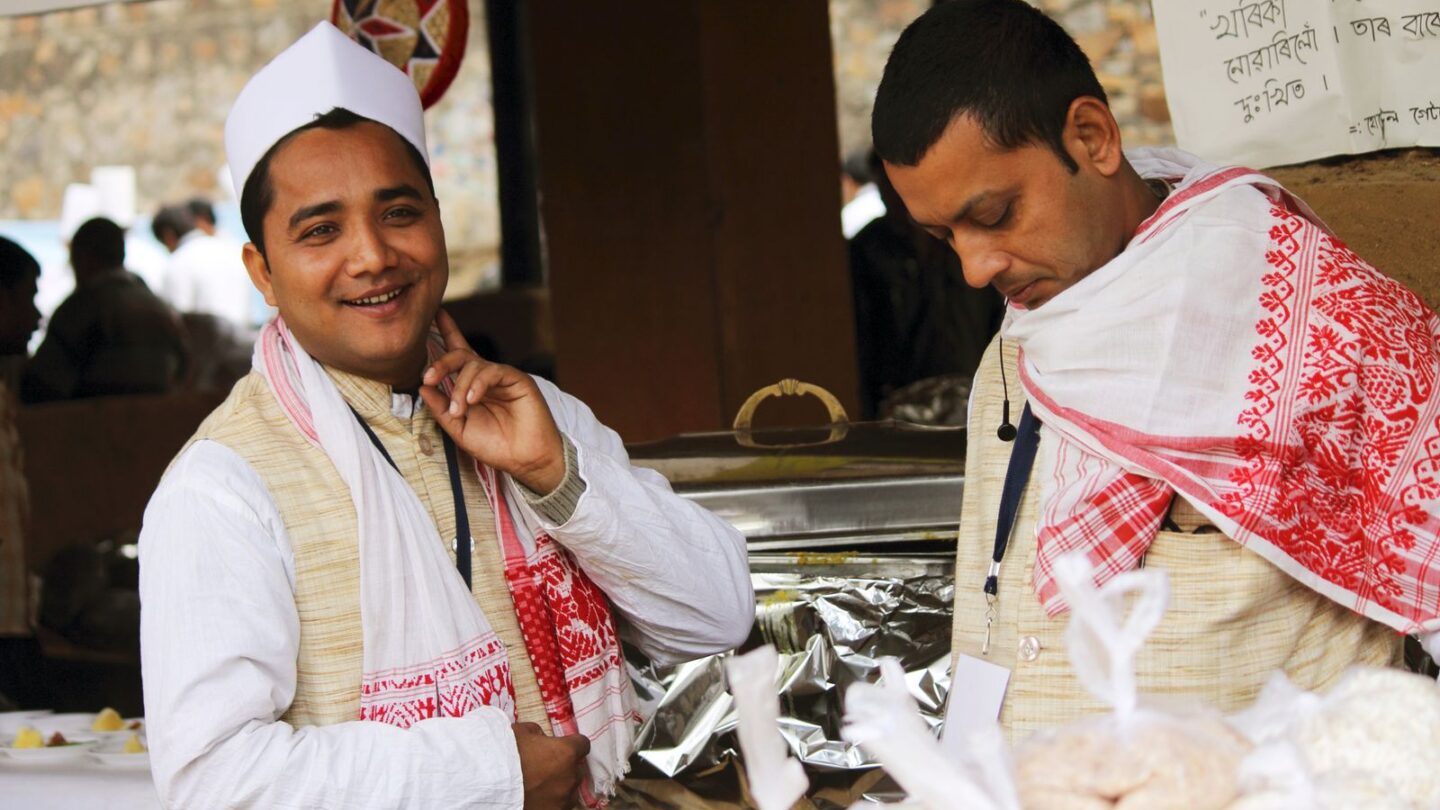
Muga silk is a naturally golden silk made from the cocoons of the Assam silkmoth, Antheraea assamensis, which is found mainly in Assam. It received a Geographical Indication (GI) tag in 2007, and a GI logo followed in 2014. Assam produces roughly 90–95% of India’s muga, and the fabric’s sheen tends to grow brighter with each careful wash.
The golden silk has dressed Assamese royalty, brides and dancers for centuries. Today it appears most often as the mekhela sador, the two-piece dress of Assamese women. However, muga silk faces falling output, rising prices and cheap imitations. Consequently, buyers need to know what they are paying for.
Key takeaways
- Muga silk comes from the semi-domesticated Antheraea assamensis silkworm, reared outdoors on trees.
- The main host plants are som and soalu, both native to the Brahmaputra valley.
- Muga silk received a GI tag in 2007 and a GI logo for authentication in 2014.
- A pure muga mekhela sador usually costs about ₹35,000 to ₹70,000, and heavily worked pieces cost more.
- Mission Senehjori, a ₹411 crore, three-year programme launched in June 2026, aims to revive the sector.
Muga silk at a glance
| Detail | Information |
|---|---|
| Silkworm | Antheraea assamensis (Assam silkmoth) |
| Main host plants | Som (Persea bombycina) and soalu (Litsea polyantha) |
| Natural colour | Golden yellow to light brown, without dye |
| GI tag | Registered in 2007 |
| GI logo | Allotted in 2014, managed through ASTEC |
| Share of India’s muga | Roughly 90–95% from Assam |
| Main weaving hub | Sualkuchi, about 35 km from Guwahati |
| Main commercial crops | Jethua (May–June) and Kotia (October–November) |
| Signature garment | Mekhela sador |
| Revival programme | Mission Senehjori, launched 3 June 2026 |
What makes muga silk unique?
Muga silk is one of the few silks that is golden by nature. The colour comes from the silkworm and its diet, not from dye. Therefore, a genuine piece keeps its tone for decades, while many dyed silks fade.
The fibre is also strong and durable. Families often pass a muga mekhela sador from mother to daughter. Moreover, the lustre tends to improve with gentle hand washing, which sets muga apart from most other silks.
Muga silk is a “wild” or vanya silk. The worms feed outdoors on living trees, rather than indoors on cut leaves like mulberry silkworms. As a result, the climate, the trees and the local farmers all shape the final fabric.
How muga silk is made
Muga production follows a long chain from tree to loom. Each step depends on skilled local hands.
- Farmers plant and maintain som or soalu trees in open plots.
- Grainages supply disease-free eggs, or seed, for each rearing season.
- Young worms go onto the trees, where they feed outdoors for several weeks.
- Farmers guard the worms against birds, wasps, rain and heat, often with nets.
- Mature worms spin cocoons, which farmers collect and sort.
- Reelers cook the cocoons and reel the fine golden thread, often by hand.
- Weavers set up the yarn on handlooms and add motifs in muga or other threads.
The silkworm goes through several broods each year. However, only two usually serve as commercial crops: Jethua in May and June, and Kotia in October and November. The other broods mainly produce seed for the next season. Consequently, a bad season can hit both cocoon output and the following year’s seed supply.
Muga silk host plants: som and soalu
The worms feed mostly on som and soalu leaves. Som (Persea bombycina) is the main host and gives the classic golden shade. Soalu (Litsea polyantha) is the second major host. Additionally, older texts mention trees such as champa as occasional food plants.
The host plants explain why muga silk stays tied to Assam. The trees grow well in the humid Brahmaputra valley. Furthermore, the worms need a narrow band of temperature and humidity. Researchers at the Central Muga Eri Research and Training Institute cite about 25–27°C and 75–85% humidity as ideal conditions.
Muga silk GI tag and history
Muga silk received GI registration in 2007 under the Geographical Indications of Goods Act, 1999. Later, in June 2014, it gained a registered GI logo. The Assam Science Technology and Environment Council (ASTEC) handles registration of authorised users, and an inspection body monitors use of the mark.
The history runs much deeper. Sualkuchi’s weaving tradition dates back to about the 11th century, according to Assam Tourism. Later, the Ahom kings made muga a royal fabric. The court kept muga garments for nobles and honoured guests, and it employed skilled rearers and weavers.
| Year | Milestone |
|---|---|
| 11th century | Weaving tradition takes root at Sualkuchi under a Pala king |
| Ahom era (13th–19th centuries) | Muga becomes a prestige fabric of the royal court |
| 2007 | Muga silk of Assam receives a GI tag |
| 2014 | GI logo allotted for authentication |
| 2024 | State figures show muga production falling short of demand |
| 3 June 2026 | Mission Senehjori launched to revive the value chain |
Sualkuchi: the home of muga silk weaving
Sualkuchi lies on the north bank of the Brahmaputra in Kamrup district. It sits about 35 km from Guwahati by road, so a day trip works well. The town weaves muga, pat and eri silk, and many homes have a handloom.
Visitors can watch weavers at work and buy directly from workshops and showrooms. However, prices vary widely, and not every “muga” piece in town is pure. Therefore, ask for the Silk Mark tag or GI logo before you pay. Combine the visit with the ferry ghats and temples along the river.
The best time to visit Northeast India for a Sualkuchi trip is October to March. The weather stays dry and pleasant then. In contrast, monsoon floods can disrupt roads and river travel from June to September.
Muga silk vs eri and pat silk
Assam produces three famous silks: golden muga, white pat and warm eri. Each comes from a different silkworm and suits a different use.
| Feature | Muga silk | Eri silk | Pat (mulberry) silk |
|---|---|---|---|
| Silkworm | Antheraea assamensis | Samia ricini | Bombyx mori |
| Host plant | Som, soalu | Castor, kesseru | Mulberry |
| Rearing | Outdoors on trees | Indoors | Indoors |
| Natural colour | Golden | Creamy white to brick red | White to off-white |
| Yarn type | Reeled filament | Mostly spun | Reeled filament |
| Texture | Stiff, glossy, durable | Soft, warm, wool-like | Smooth, fine, drapes well |
| Typical use | Mekhela sador, ceremonial wear | Shawls, stoles, winter wear | Mekhela sador, sarees |
| Relative price | Highest | Moderate | Moderate to high |
Eri is often called peace silk, because the moth usually leaves the cocoon before spinning. Meanwhile, pat is Assam’s mulberry silk, used widely in wedding wear. Many weavers combine a pat sador with a muga mekhela, or add muga motifs to pat. As a result, buyers get the golden look at a lower price.
Muga silk price in 2026
Muga silk is among the costliest handloom fabrics in India. Prices depend on the weight of the yarn, the amount of motif work and whether the piece is pure or mixed. The ranges below come from Sualkuchi and online handloom listings, so treat them as rough guides.
| Item | Typical price range (indicative) |
|---|---|
| Pure muga mekhela sador, plain or light work | About ₹35,000 to ₹55,000 |
| Pure muga mekhela sador, rich motif work | About ₹55,000 to ₹70,000 or more |
| Pat sador with muga mekhela | About ₹30,000 to ₹40,000 |
| Heavy bridal or heirloom pieces | Can exceed ₹1 lakh |
| Stoles and smaller pieces | Much lower; varies widely by size |
Prices have climbed as output falls. For instance, Sentinel Assam reported in November 2024 that the state produced about 164 tonnes of muga silk a year against demand of about 190 tonnes. Additionally, the gap for pat silk was far wider. Consequently, a very cheap “muga” piece is a strong warning sign.
How to identify genuine muga silk
Fake and blended muga is common in markets across India. Some sellers pass off tussar, dyed silk or synthetic yarn as muga. Therefore, check several signs together.
- Silk Mark tag: look for the Silk Mark label and scan its QR code to confirm the fibre.
- GI logo: authorised producers can use the muga GI logo, registered through ASTEC.
- Colour: genuine muga has a warm, natural golden tone, not a flat or brassy yellow.
- Texture: pure muga feels slightly stiff and crisp when new, then softens with use.
- Price: a full mekhela sador far below market rates usually signals a blend.
- Testing: silk testing labs, including facilities in Sualkuchi, can confirm fibre content.
- Seller: buy from government emporiums, cooperatives or well-known weavers.
A burn test on a loose thread also helps. Real silk smells like burnt hair and leaves crushable ash. In contrast, synthetic yarn melts into a hard bead and smells of plastic.
Caring for muga silk
Muga silk lasts for generations with basic care. The fabric is tough, but harsh handling can still damage motifs and borders.
- Hand wash in cold water with a mild detergent, or choose dry cleaning for heavy work.
- Avoid bleach and strong soaps, because they can dull the natural gold.
- Do not wring the fabric; press out water gently in a towel.
- Dry in the shade, since strong sun can weaken fibres over time.
- Iron on a low setting, with a thin cotton cloth between the iron and the silk.
- Store folded in cotton or muslin, and refold every few months to avoid creases.
With gentle washing, many owners find the sheen grows richer over the years. Moreover, avoid storing muga in plastic, which traps moisture.
Challenges facing muga silk
Muga silk faces serious pressure from climate and land use. The worms live outdoors, so even small shifts in weather matter. Studies at the Central Muga Eri Research and Training Institute found that mortality rises outside a band of about 15–33°C. As a result, some farmers have shifted rearing dates later to avoid heat.
Disease also takes a heavy toll. Researchers estimate average losses of 30–35% from microbial disease, and far higher in hot, humid spells. Furthermore, pesticide drift from nearby tea gardens and air pollution near roads and industry harm the worms and host trees. Meanwhile, host plantations have shrunk as land turns to tea, housing and farms.
These pressures reduce farmer incomes. Consequently, many young people leave rearing for other work. The main producing districts include Lakhimpur, Dhemaji, Sivasagar, Jorhat and Golaghat, along with Kamrup and Goalpara. Our guide to the districts of Assam shows where these areas lie.
Mission Senehjori and the future of muga silk
The Union Ministry of DoNER and the Assam government launched Mission Senehjori on 3 June 2026. Reports put the budget at about ₹411 crore over three years. The mission covers the full chain, from host plantations and seed to reeling, weaving, branding and exports.
Planned steps include modern reeling units in Jorhat, Sivasagar, Sualkuchi, Majuli and Lakhimpur, plus a muga spun silk unit at Dhemaji. Additionally, the mission promises digital traceability and stronger GI authentication. The goal is to reach over 2.5 lakh rearers, reelers, weavers and entrepreneurs. Results will take time, so watch official updates for progress.
Muga silk in Assamese culture
Muga silk is central to Assamese dress and ritual. Women wear muga mekhela sador at weddings, Bihu and religious events. Similarly, Bihu dancers often wear muga or muga-bordered costumes during the April festival.
The fabric also carries the language and motifs of the region. Weavers name designs in Assamese, as our guide to the Assam language explains. Furthermore, households wear their best silks at seasonal rites such as Kati Bihu. Travellers visiting Kaziranga can plan a Sualkuchi stop on the same trip using our Kaziranga safari booking guide.
Frequently asked questions
What is muga silk made from?
Muga silk comes from the cocoons of the Assam silkmoth, Antheraea assamensis. The worms feed outdoors on som and soalu trees. Their cocoons give a naturally golden filament, which reelers unwind into yarn. No dye creates the colour, so a genuine piece keeps its golden tone for many years.
When did muga silk get a GI tag?
Muga silk of Assam received a Geographical Indication tag in 2007. Later, in 2014, it gained a registered GI logo for authentication. The Assam Science Technology and Environment Council manages authorised users of the logo. The tag means only muga produced within Assam’s defined area can carry the GI name.
Why is muga silk so expensive?
Output is low, and every stage relies on manual work. Farmers rear the worms outdoors, so weather, disease and pests often cut yields. State figures reported in 2024 showed production falling short of demand. As a result, a pure muga mekhela sador usually costs about ₹35,000 to ₹70,000, and rich bridal pieces cost more.
How can I check if muga silk is genuine?
Look for the Silk Mark tag and scan its QR code. Also check for the muga GI logo from authorised producers. Genuine muga has a warm golden tone and feels crisp when new. Buy from cooperatives, government emporiums or known weavers. For costly pieces, a silk testing lab can confirm the fibre content.
Where is the best place to buy muga silk?
Sualkuchi, about 35 km from Guwahati on the north bank of the Brahmaputra, is the best-known centre. Guwahati also has government emporiums and handloom cooperatives. Many weavers now sell online too. Wherever you buy, ask for the Silk Mark tag or GI logo and a proper bill.
How do you wash muga silk at home?
Hand wash muga in cold water with a mild detergent, then press out water in a towel without wringing. Dry the fabric in the shade and iron it on a low setting through a cotton cloth. Many owners notice the golden sheen becomes richer with careful washing over the years.
What is the difference between muga and pat silk?
Muga comes from a wild silkworm reared outdoors on som and soalu trees, and it is naturally golden. Pat is mulberry silk from the Bombyx mori worm, reared indoors, and it is white or off-white. Muga feels crisper and costs more, while pat is smoother and drapes softly.
Buy and care for muga silk with confidence
Muga silk is Assam’s golden heritage fabric, GI-tagged since 2007 and now backed by Mission Senehjori. Buy with the Silk Mark or GI logo, expect realistic prices, and wash it gently. Plan a Sualkuchi visit on your Assam trip to see the looms at work.
Discover more traditions in Festivals & Culture or visit the Frontier News homepage.
Related guides
More in Festivals & Culture →
Festivals & Culture
Nongkrem Dance: Khasi Harvest Festival Guide and 2026 Dates

Festivals & Culture
Bhut Jolokia: The Ghost Pepper of Northeast India Explained
Festivals & Culture