Ravangla Travel Guide: Buddha Park and Views for 2026
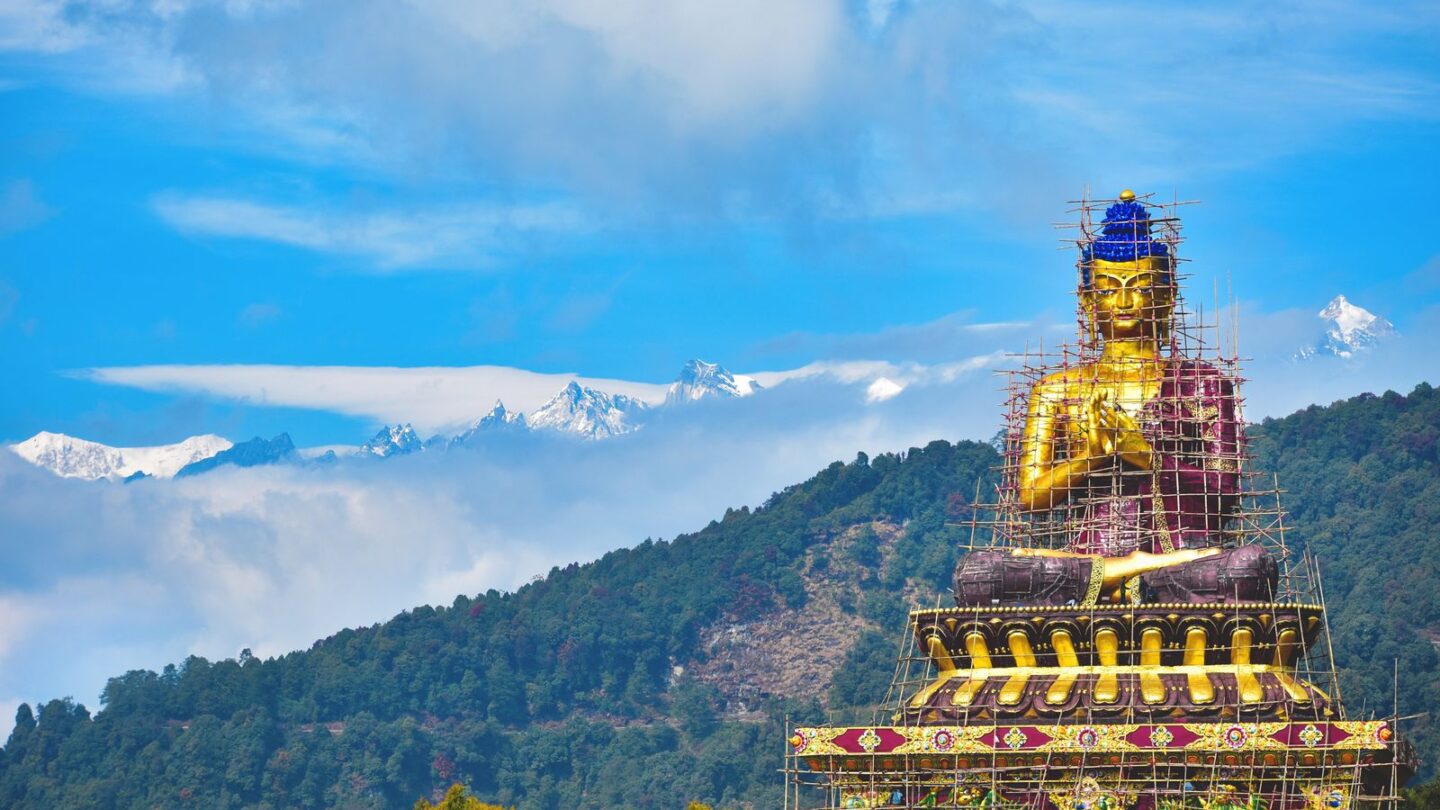
Ravangla is a small hill town in South Sikkim, known for the 130 ft Buddha statue at Tathagata Tsal, or Buddha Park. It lies at roughly 7,000 to 8,000 ft, about 65 to 80 km from Gangtok by road, depending on the source. Indian tourists need no permit for the town, only a photo ID and the statewide tourist fee.
The town, also spelt Rabongla, sits between Gangtok, Namchi and Pelling, so many travellers pass through it. However, it deserves a night of its own. Ralong monastery, Temi tea estate, the Maenam forest and clear Kanchenjunga views all lie within a short drive. This guide covers sights, fees, routes, seasons and a practical two-day plan.
Key takeaways
- The Buddha Park statue is about 130 ft (40 m) tall and was consecrated by the 14th Dalai Lama on 25 March 2013.
- Ravangla is roughly 65 to 80 km from Gangtok, about 25 to 30 km from Namchi and about 50 to 55 km from Pelling.
- Indian visitors need no Protected Area Permit for the town; the statewide ₹50 tourist fee applies.
- Buddha Park entry is usually ₹50 for Indians, with hours of about 9 am to 5 or 6 pm.
- The best seasons are March to June and September to November, while July and August bring heavy rain.
Ravangla at a glance
| Detail | Information |
|---|---|
| State and district | Sikkim, Namchi district (South Sikkim) |
| Altitude | Roughly 7,000 to 8,000 ft (sources differ) |
| Main sight | Buddha Park (Tathagata Tsal), 130 ft statue |
| Distance from Gangtok | About 65 to 80 km (sources differ) |
| Distance from Bagdogra | About 125 km |
| Distance from NJP | About 120 to 125 km |
| Permit for Indians | None; carry photo ID |
| Statewide tourist fee | ₹50 per tourist since 14 March 2025 |
| Best seasons | March to June, September to November |
| Ideal stay | 1 night, or 2 nights with day trips |
Where Ravangla is and why it matters
Ravangla lies in the Namchi district of South Sikkim, on the hill road that links Gangtok with Namchi and Pelling. The district was reorganised from the old South district, and the town later grew around a busy market and a bus stand. Consequently, it works as a crossroads for the western half of the state.
The setting is the main attraction. On clear mornings, the Kanchenjunga range appears along the northern horizon, with peaks such as Pandim, Kabru and Siniolchu in view. Meanwhile, Buddhist culture shapes daily life here, and a Tibetan settlement stands close to the market. The upper slopes can see light snow in winter, and rhododendrons and orchids flower in April and May.
For a wider view of the state, read our list of Sikkim tourist places. Gangtok, the capital, has its own profile in our Sikkim capital guide.
Buddha Park (Tathagata Tsal): the main sight in Ravangla
Buddha Park is the reason most people stop in Ravangla. A 130 ft copper statue of the seated Buddha rises above the site, and it marks the 2550th anniversary of the Buddha’s birth. Construction ran between 2006 and 2013, and the 14th Dalai Lama consecrated the statue on 25 March 2013.
The park lies about 1 km north of the town, within walking distance of the bus stand. Furthermore, the grounds include a prayer hall, a small museum with a spiral gallery, a meditation centre and landscaped paths. A pond called Cho Djo sits inside a wooded area. Prayer wheels and viewpoints give wide mountain views on clear days.
| Detail | Information |
|---|---|
| Official name | Tathagata Tsal |
| Statue height | About 130 ft (40 m) |
| Distance from town | About 1 km from Ravangla bus stand |
| Timings | About 9 am to 5 pm; some listings say 6 pm |
| Entry fee | Usually ₹50 for Indians; one listing gives ₹100 for foreigners |
| Time needed | 1 to 2 hours |
Listed timings and fees differ between sources. Therefore, confirm both at the gate. Arrive early, because morning light is clearer and tour groups arrive later in the day.
Remove shoes before entering the prayer hall and museum. Additionally, avoid flash photography in the meditation areas.
Ralong monastery and other monasteries near Ravangla
Ralong, also spelt Ralang, is the largest monastic site near Ravangla. The original monastery dates to 1768, while the newer Palchen Choeling complex was completed in 1995. It follows the Kagyu tradition and holds a collection of paintings and thangkas. Sikkim Tourism lists the site as free to enter, with daytime hours from about 9 am.
The distance depends on the source. Some listings say about 6 km from town, while Sikkim Tourism gives about 13 km by road. Therefore, plan on 30 to 45 minutes each way. The monastery holds the Pang Lhabsol festival for Mount Kanchenjunga, usually around August or September, and it also stages masked cham dances.
Bon monastery at Kewzing
Kewzing village, about 6 to 10 km from Ravangla, has the only Bon monastery in Sikkim, according to Sikkim Tourism. The Bon tradition predates Buddhism in Tibet. As a result, the rituals and iconography look different from those at Ralong. Village walks here also reveal terraced farms, cardamom groves and good birdwatching.
Temi Tea Garden and Maenam Wildlife Sanctuary
Temi Tea Garden is Sikkim’s only tea estate. It began in 1969 and covers about 440 acres of terraced slopes. Sikkim Tourism places it about 18 km from Ravangla. The estate moved to organic methods from 2005. Visit in the morning, when clouds are lower and the pluckers are at work.
Maenam Wildlife Sanctuary covers about 35 sq km above the town. Its forests hold rhododendrons, orchids, birds and, reportedly, red pandas, Himalayan black bears and leopards. However, sightings of large animals are rare, so visitors should not expect them. A wildlife skywalk has been proposed for the area, but plans and dates remain unconfirmed.
| Sight | Approx. distance from Ravangla | Fee | Best for |
|---|---|---|---|
| Buddha Park | About 1 km | About ₹50 | Views, statue, museum |
| Ralong monastery | 6 to 13 km (sources differ) | Free (listed) | Kagyu monastery, murals |
| Bon monastery, Kewzing | About 6 km | Free (listed) | Bon tradition |
| Temi Tea Garden | About 18 km | Free (listed) | Tea terraces |
| Maenam sanctuary | About 7 km | Free (listed) | Forest walks, birds |
| Tendong Hill | About 13 km | No fee | Trek and viewpoint |
| Borong hot springs | About 21 km | Free (listed) | Winter soak |
Fees and hours change without notice. Consequently, treat this table as a planning guide rather than a price list.
How to reach Ravangla
Ravangla has no airport or railway station. Most visitors therefore fly into Bagdogra, about 125 km away, or take a train to New Jalpaiguri (NJP), about 120 to 125 km away. Pakyong airport lies about 75 km away, but it had no scheduled flights in 2025 and 2026. As a result, treat Bagdogra as the practical gateway.
From Bagdogra or NJP, a taxi takes about 4.5 to 5 hours, depending on traffic and road works. Our guides to Bagdogra to Gangtok options explain the first leg for travellers who stop in the capital first. Shared jeeps and buses also serve Ravangla from Gangtok, Namchi and Jorethang, but frequencies vary. Ask at the taxi stand for the latest timetable.
| Route | Approx. distance | Typical time |
|---|---|---|
| Gangtok to Ravangla | 65 to 80 km | 2.5 to 3.5 hours |
| Namchi to town | 25 to 30 km | 1 to 1.5 hours |
| Ravangla to Pelling | 50 to 55 km | 2.5 to 3 hours |
| Bagdogra to Ravangla | About 125 km | 4.5 to 5 hours |
| NJP to Ravangla | 120 to 125 km | 4.5 to 5 hours |
Times stretch during the monsoon and after landslides. Moreover, Sikkim’s hill roads slow to a crawl behind army convoys and trucks. Leave early and never plan a tight flight connection on the same day.
Permits, fees and documents for Ravangla
Indian citizens need no Inner Line Permit or Protected Area Permit for Ravangla. Carry a valid photo ID, because check posts and hotels ask for it. Since 14 March 2025, Sikkim has also charged a ₹50 Tourism Sustainable Development fee per tourist, so keep small change ready.
Foreign nationals need a Restricted Area Permit for Sikkim, which they apply for online. Confirm current rules with your hotel or operator before you travel. In contrast, high-altitude zones such as Tsomgo Lake, Nathula and North Sikkim need separate permits arranged through registered operators. Our Sikkim permit guide explains each one.
| Traveller | Requirement for Ravangla |
|---|---|
| Indian tourist | Photo ID and the statewide ₹50 fee |
| Foreign national | Passport and Sikkim Restricted Area Permit; confirm with your operator |
| Trekkers in Maenam | Check local forest department rules before entering |
Best time to visit Ravangla
The best time to visit Ravangla is March to June and September to November. Spring brings blooming rhododendrons and orchids, while autumn gives the clearest mountain views. In contrast, July and August bring heavy rain, fog and landslides. Winter is cold, and upper areas can see light snow.
Temperatures range from about 3 °C to 20 °C over the year, according to one travel guide. Consequently, carry a warm jacket even in spring. For a state-by-state comparison, use our best time to visit Northeast India guide.
| Season | Months | What to expect |
|---|---|---|
| Spring | March to May | Flowers, clear days, mild weather |
| Early summer | June | Warm days, first rain, greenery |
| Monsoon | July to August | Heavy rain, poor views, landslide risk |
| Autumn | September to November | Best mountain views, cool and dry |
| Winter | December to February | Cold, possible snow on upper slopes, hot springs season |
Where to stay in Ravangla
The town offers homestays, small hotels and a few resorts on the ridge, and most have mountain-facing rooms. Homestays usually include home-cooked Sikkimese meals. Furthermore, rooms with a Kanchenjunga view cost more, and prices rise sharply in October and around long weekends.
As a rough guide, budget rooms often start near ₹1,500 to ₹3,000 a night, while mid-range hotels commonly cost ₹3,500 to ₹6,000. These figures are indicative, so compare current rates before you book. In addition, confirm heating, hot water and parking, because winter nights are cold and the roads are steep.
- Near the market: easy access to restaurants, shops and the taxi stand.
- Near Buddha Park: quieter, with early access to the statue.
- Village homestays at Kewzing: local meals, bird walks and terraced farms.
A two-day Ravangla itinerary
Two days cover the main sights without rushing. Furthermore, this plan works well as a break between Gangtok and Pelling.
Day 1: town and Buddha Park
- Arrive by late morning and check in near the market or the ridge.
- Visit Buddha Park for the statue, museum and viewpoints, allowing two hours.
- Walk through the Tibetan settlement and the market in the afternoon.
- Watch the sunset over the Kanchenjunga range from a ridge-top viewpoint.
Day 2: monasteries and tea
- Start early for Ralong monastery and its murals.
- Continue to the Bon monastery at Kewzing or take a short village walk.
- Drive to Temi Tea Garden for the terraces and a tea tasting.
- Depart for Namchi, Pelling or Gangtok by mid-afternoon.
Travellers with a third day can add Tendong Hill, the Maenam trails or the Borong hot springs. Additionally, keep a buffer for road delays.
Ravangla on a South Sikkim loop
The town fits neatly into a loop through Gangtok, Namchi and Pelling. Namchi, about 25 to 30 km away, has the Char Dham complex and the Samdruptse statue. Pelling, about 50 to 55 km away, is the base for Kanchenjunga viewpoints and monasteries. Our Pelling travel guide covers that stop.
Most drivers go Gangtok to Ravangla to Pelling, then return via Jorethang and Namchi. However, the reverse works equally well. The Ravangla road sits higher and is more exposed to landslides in heavy rain. As a result, drivers sometimes switch to the lower Jorethang road in July and August.
Common mistakes to avoid
- Treating the town as a 30-minute stop: the drive alone eats hours, so stay a night.
- Visiting in July or August: clouds hide the peaks and landslides can block the road.
- Skipping cash: small counters and village shops may not take digital payments.
- Assuming permits are needed: none apply for the town, but North Sikkim sites need separate approval.
- Ignoring altitude: the town sits high, so pack warm layers even for a spring visit.
- Trusting one fee list: hours and fees vary between sources, so confirm at each gate.
Frequently asked questions
How far is Ravangla from Gangtok?
Ravangla is roughly 65 to 80 km from Gangtok by road, depending on the source and the route. The drive usually takes 2.5 to 3.5 hours. Landslides in the monsoon and army convoys can add more time, so leave early and confirm the road status with your driver.
Do I need a permit to visit Ravangla?
No. Indian citizens need no Inner Line Permit or Protected Area Permit for Ravangla. Carry a valid photo ID and pay the statewide ₹50 Tourism Sustainable Development fee, which Sikkim has charged since 14 March 2025. Foreign nationals should confirm the Restricted Area Permit process with their operator before travelling.
How tall is the Buddha statue at Ravangla?
The Buddha statue at Tathagata Tsal stands about 130 ft (40 m) tall. It is made of copper and marks the 2550th anniversary of the Buddha’s birth. The 14th Dalai Lama consecrated it on 25 March 2013, after construction that began in 2006. Entry is usually ₹50 for Indian visitors.
What is the best time to visit Ravangla?
March to June and September to November are the best months. Spring brings flowers, and autumn gives the clearest views of the Kanchenjunga range. July and August bring heavy rain and landslides. Winter is cold, with possible light snow on the upper slopes, so carry warm clothing between December and February.
How many days are enough for Ravangla?
One night is enough for Buddha Park, Ralong monastery and Temi Tea Garden. Two nights allow a relaxed pace and add Kewzing, Tendong Hill or the Maenam trails. Travellers who use it only as a stop between Gangtok and Pelling should still plan at least three hours for the town.
What is Tathagata Tsal?
Tathagata Tsal is the formal name of Buddha Park, about 1 km from the Ravangla bus stand. It has a 130 ft Buddha statue, a prayer hall, a museum, a meditation centre and gardens. Timings are usually about 9 am to 5 pm, and entry costs about ₹50 for Indians. Confirm both at the gate.
Is Ravangla better than Pelling?
They serve different goals. Ravangla offers a large Buddha statue, a tea estate, forest walks and quieter stays. Pelling focuses on direct Kanchenjunga viewpoints, waterfalls and the old monasteries near Yuksom. Most travellers visit both, since the two towns are only about 50 to 55 km apart.
Can I visit Ravangla as a day trip from Gangtok?
Yes, but it is a long day. The round trip takes five to seven hours of driving, which leaves little time for Buddha Park and Ralong monastery. Therefore, most travellers choose an overnight stay, especially if they also want Temi Tea Garden or a morning view of the peaks.
Planning your Ravangla trip
This hill town rewards travellers who slow down. Spend a night, visit Buddha Park early, add Ralong monastery and Temi Tea Garden, and keep spare time for mountain roads. Check fees and hours locally, and carry cash and warm clothing.
Explore more of the region in Northeast Travel or return to the Frontier News homepage.
Related guides
More in Northeast Travel →
Northeast Travel
Lachung Travel Guide 2026: Yumthang, Permits and Stays
Northeast Travel
Sikkim Tourist Places: 15 Best Places to Visit in 2026
Northeast Travel