Manipur Language: Meiteilon (Manipuri) and Other Languages
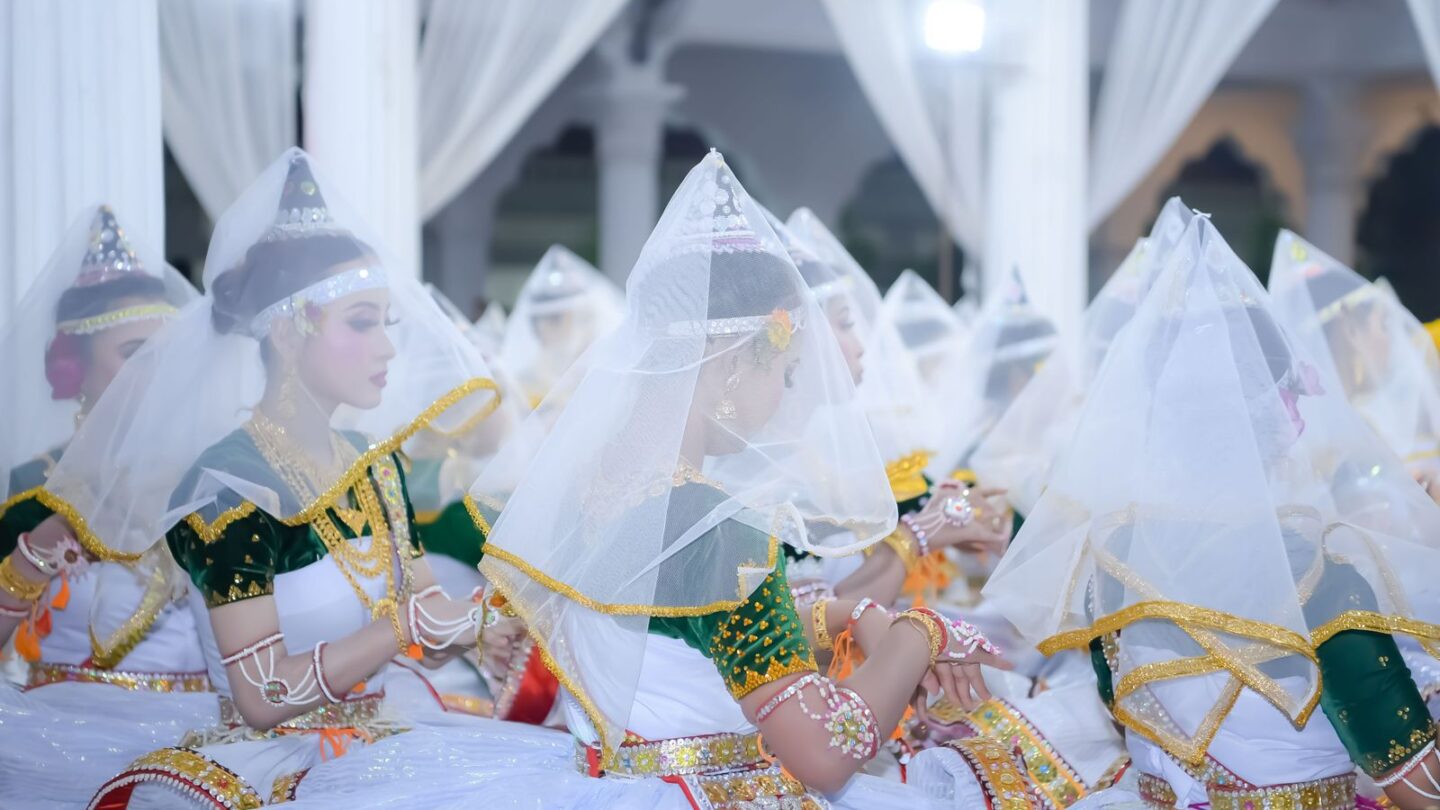
The main Manipur language is Meiteilon, also called Manipuri or Meitei, the official language of the state and the mother tongue of about 53% of residents in Census 2011. It entered the Eighth Schedule of the Constitution on 20 August 1992. Since a 2021 amendment, state law defines it as Manipuri written in the Meitei Mayek script.
Manipur is small, yet census takers recorded 149 mother tongues there in 2011. Meiteilon dominates the Imphal valley, while the hill districts speak many Naga and Kuki-Chin languages such as Tangkhul, Thadou, Poumai, Mao, Rongmei and Paite. Consequently, Meiteilon also works as the common Manipur language that links communities.
Key takeaways
- Meiteilon (Manipuri) is the official Manipur language under the Manipur Official Language Act, 1979.
- Manipuri joined the Eighth Schedule through the 71st Amendment on 20 August 1992.
- A 2021 amendment made Meitei Mayek the official script, with Bengali script allowed alongside it for up to 10 years.
- Census 2011 counted about 15.2 lakh Manipuri speakers in the state, roughly 53% of 28.6 lakh people.
- Manipuri is also an associate official language in four districts of Assam since August 2024.
Manipur language at a glance
| Detail | Information |
|---|---|
| Official language | Meiteilon, also called Manipuri or Meitei |
| Language family | Tibeto-Burman, within Sino-Tibetan |
| Governing law | Manipur Official Language Act, 1979, amended in 2021 |
| Official script | Meitei Mayek, with Bengali script in parallel for a transition period |
| Eighth Schedule | Added on 20 August 1992 (71st Amendment) |
| Manipuri Language Day | 20 August every year |
| Speakers in Manipur (Census 2011) | About 15.22 lakh, 53.3% of the state |
| Speakers across India (Census 2011) | About 17.6 lakh |
| Mother tongues recorded in Manipur | 149 (Census 2011) |
| Other official use | Associate official language in Cachar, Sribhumi, Hailakandi and Hojai (Assam) |
What is the official Manipur language?
Meiteilon is the official Manipur language. The Manipur Legislative Assembly passed the Manipur Official Language Act on 27 October 1979. The Act made Manipuri the language of state administration, while English continued for many official purposes.
The original Act described the Manipur language as written in the Bengali script. However, a long campaign by script activists changed that wording. The Manipur Official Language (Amendment) Act, 2021, received assent on 25 February 2021 and reached the official gazette on 10 March 2021. It now defines the language as Manipuri written in Meitei Mayek.
Furthermore, the amendment allows the Bengali script and Meitei Mayek to run side by side for up to 10 years. As a result, signboards and notices in Imphal often show both scripts. English also remains common in courts, higher education and communication with the Centre.
Meiteilon, Manipuri or Meitei?
All three names refer to the same language. “Meiteilon” means the Meitei language in the language itself. “Manipuri” is the name used in the Constitution and in most official records. Meanwhile, linguists and many speakers prefer “Meitei” or “Meetei”. Therefore, you will see all three names on this Manipur language page and elsewhere.
Manipuri in the Eighth Schedule
Parliament added Manipuri to the Eighth Schedule through the Constitution (Seventy-first Amendment) Act. The change took effect on 20 August 1992, alongside Konkani and Nepali. Since then, the state has marked 20 August as Manipuri Language Day.
Eighth Schedule status brings the Manipur language practical benefits. For example, candidates can choose Manipuri in some national examinations, and the Centre supports its literature and teaching. Additionally, the Sahitya Akademi had already recognised Manipuri as a literary language in 1972, twenty years before constitutional inclusion.
Some groups also campaign for classical status for the Manipur language. However, the language was not among the five that the Union Cabinet made classical in October 2024. Those were Marathi, Pali, Prakrit, Assamese and Bengali. Our guide to the Assam language covers the Assamese side of that decision.
Meitei Mayek: the script of the Manipur language
Meitei Mayek is the indigenous script of the Manipur language. Its exact origins remain debated. Some scholars link it to Brahmi-derived scripts, and old copper plates and manuscripts, called puya, preserve early forms.
From Bengali script back to Meitei Mayek
In the early 18th century, King Pamheiba, known as Garib Niwaz, adopted Gaudiya Vaishnavism as the state religion. Over the following decades, the Bengali script gradually replaced Meitei Mayek for most writing. Popular accounts say many puya texts were burned in this period. However, historians debate the scale of that event, and the old script survived in limited use into the 19th century.
The Manipur language script revival began in the 20th century. Consequently, a government-backed committee standardised a modern alphabet, which Manipur approved around 1978 to 1980, according to different sources. The modern set has 27 core letters, plus extra letters and vowel signs. Unicode added Meitei Mayek in 2009, which made typing it on phones and computers possible.
Meitei Mayek in schools and media
Schools began teaching Meitei Mayek in a phased way from the mid-2000s, starting with the lowest classes. Sources give 2005 or 2006 as the starting year. Moreover, the first Class 10 board exams in the script reportedly took place around 2015.
Manipur language newspapers followed more slowly. A campaign in 2022 and 2023 pressed Imphal’s Manipuri dailies to adopt the script. Today, some papers print mainly in Meitei Mayek, while others still mix it with Bengali script. Therefore, visitors in Imphal will see both scripts on shop signs and mastheads.
| Period | Development |
|---|---|
| Early centuries CE | Early forms of Meitei Mayek appear on copper plates and in manuscripts |
| Early 18th century | Bengali script spreads under King Pamheiba (Garib Niwaz) |
| 1972 | Sahitya Akademi recognises Manipuri literature |
| 27 October 1979 | Manipur Official Language Act passed |
| Around 1978 to 1980 | Modern 27-letter Meitei Mayek alphabet standardised |
| 20 August 1992 | Manipuri added to the Eighth Schedule |
| Mid-2000s | Meitei Mayek enters school teaching in phases |
| 2009 | Meitei Mayek encoded in Unicode |
| March 2021 | Amendment makes Meitei Mayek the official script |
| August 2024 | Manipuri becomes associate official language in four Assam districts |
Manipur language census figures
Census 2011 offers the latest complete Manipur language data. The census counted 28,55,794 people in the state and recorded 149 mother tongues. The table lists the largest groups by mother tongue, not by second language.
| Mother tongue (census name) | Speakers in Manipur | Share of state | Language group |
|---|---|---|---|
| Manipuri (Meiteilon) | 15,22,132 | 53.3% | Tibeto-Burman, Meitei |
| Thado (Thadou) | 2,23,171 | 7.8% | Kuki-Chin |
| Tangkhul | 1,83,091 | 6.4% | Naga |
| Poula (Poumai) | 1,35,349 | 4.7% | Naga |
| Mao | 89,011 | 3.1% | Naga |
| Nepali | 63,756 | 2.2% | Indo-Aryan |
| Rongmei | 55,578 | 1.9% | Naga (Zeliangrong) |
| Paite | 55,031 | 1.9% | Kuki-Chin |
| Kabui | 54,038 | 1.9% | Naga (Zeliangrong) |
| Hmar | 49,081 | 1.7% | Kuki-Chin |
| Liangmei | 44,311 | 1.6% | Naga (Zeliangrong) |
| Vaiphei | 39,902 | 1.4% | Kuki-Chin |
| Bengali | 30,561 | 1.1% | Indo-Aryan |
These numbers come from the census mother-tongue tables. The census often lists closely related names separately, such as Rongmei and Kabui, or Thado and Kuki. As a result, the true size of some groups depends on how speakers identify. Treat the figures as indicative, and expect the next census to update them.
Across India, Census 2011 counted about 17.6 lakh Manipuri speakers. Outside Manipur, the largest group lives in Assam, at roughly 1.7 lakh, followed by Tripura. Communities also live in Bangladesh and Myanmar.
Other languages of Manipur
The hill districts hold most of the state’s variety beyond the main Manipur language. Broadly, the languages fall into Naga and Kuki-Chin groups, both part of the Tibeto-Burman family. Many hill residents speak their own language at home, Meiteilon in the market and English at school or work.
Naga languages
- Tangkhul: the main language of the Ukhrul area, with many village dialects.
- Poumai (Poula): spoken mainly in Senapati district, around the Paomata area.
- Mao: spoken in the Mao area of Senapati, near the Nagaland border.
- Rongmei, Liangmei and Zeme: the Zeliangrong languages, found in Tamenglong, Noney and nearby areas.
- Maram, Maring, Anal and Kom: smaller languages of the northern and southern hills.
The Naga communities of Manipur share ties with those across the border in Nagaland. Our overview of Nagaland tribes explains that wider Naga picture.
Kuki-Chin languages
- Thadou: the largest Kuki-Chin language of Manipur, spoken in several hill districts.
- Paite: centred on Churachandpur district.
- Hmar: spoken in the south, and related to languages of Mizoram.
- Vaiphei, Zou, Gangte and Simte: smaller languages of the southern hills.
Naming is sometimes sensitive. For example, the census lists “Thado” and “Kuki” as separate entries, and speakers may prefer different names. Therefore, it is respectful to use the name a person gives for their own language.
Indo-Aryan languages
Nepali, Bengali and Hindi make up a small share of Manipur language speakers. However, Bengali is the main language of Jiribam district, on the border with Assam’s Barak Valley. Additionally, Hindi works as a trade language in Imphal markets. Bishnupriya Manipuri is a separate Indo-Aryan language with a small number of speakers in the region, so do not confuse it with Meiteilon.
Manipur language beyond the state
The Manipur language has a long presence outside the state. In August 2024, the Assam Assembly made Manipuri an associate official language in Cachar, Sribhumi, Hailakandi and Hojai districts. These districts host long-settled Meitei communities.
Tripura also has an old Meitei population, recorded at roughly 24,000 speakers in Census 2011. Meanwhile, historic Meitei communities live in Bangladesh and in parts of Myanmar. For a regional overview of the eight states, see our list of Northeast states and capitals.
| State or country | Status of Manipuri | Notes |
|---|---|---|
| Manipur | Official language | Written in Meitei Mayek since the 2021 amendment |
| Assam | Associate official language in four districts | Cachar, Sribhumi, Hailakandi, Hojai since August 2024 |
| Tripura | Minority language | Old Meitei settlements, about 24,000 speakers |
| Bangladesh | Minority language | Meitei communities mainly in the Sylhet region |
| Myanmar | Minority language | Scattered Meitei communities |
Common Manipuri phrases for visitors
A few words of the Manipur language win smiles in Imphal markets and homestays. The spellings below follow common romanised forms. However, transliteration varies widely, and polite forms differ from casual speech. Listen to local speakers and copy their pronunciation.
| English | Manipuri (romanised) | Use |
|---|---|---|
| Hello, greetings | Khurumjari | Polite greeting, often with folded hands |
| Thank you | Thagatchari | Common everyday thanks |
| Yes | Hoi | Casual reply |
| No | Natte | Also means “it is not” |
| What is your name? | Adomgi ming kari koubage? | Polite form |
| My name is … | Eigi ming … kouwi | Add your name in the gap |
| How much is this? | Asi kaya pibage? | Useful at Ima Keithel |
| Where is it? | Kadaida leibage? | Asking directions |
| Please | Chanbiduna | Softens a request |
| Sorry | Saobiganu | Also “please do not mind” |
| Water | Eesing | Pronounced roughly “ee-sing” |
Meiteilon is a tonal language, so the same syllable can change meaning with pitch. Linguists still debate whether it has two or three tones. Consequently, short phrases are easier to learn than full sentences.
Tips for travellers on the Manipur language
You do not need to speak the Manipur language to travel in the state. English works well in hotels, offices and among younger people. Similarly, Hindi usually works with drivers and traders in Imphal.
- Learn a greeting: “Khurumjari” shows respect, especially with elders.
- Use English in offices: permit, police and tourism staff usually use English.
- Read both scripts: signs may show Meitei Mayek, Bengali script and English together.
- Ask about local names: hill villages may use their own language, not Meiteilon.
- Avoid assumptions: do not assume every resident speaks Meiteilon as a first language.
- Carry your permit: language aside, Indian visitors need a valid Inner Line Permit.
Indian visitors from outside the state need an ILP, which costs ₹100 for up to 30 days on the official portal. Our Manipur ILP guide explains the process and entry points. Foreign nationals, meanwhile, fall under the Protected Area Permit regime reimposed in December 2024.
The best time to hear the Manipur language in full cultural form is during festivals. The Sangai Festival usually runs from 21 to 30 November and features Manipuri songs, dance and theatre.
Literature and culture in the Manipur language
The Manipur language has one of the oldest written traditions in the Northeast. Old puya manuscripts record chronicles, rituals and genealogies. For instance, the royal chronicle Cheitharol Kumbaba records events of the Manipur kingdom over many centuries.
Modern writing in the Manipur language grew strongly in the 20th century. Poets, novelists and playwrights built a large body of work, and Imphal became a major theatre centre. Moreover, Manipuri cinema and radio keep the language present in everyday life. Classical Manipuri dance, famous for Ras Leela, also uses songs in Meiteilon and related forms.
Frequently asked questions
What language is spoken in Manipur?
The main Manipur language is Meiteilon, also called Manipuri or Meitei, the state’s official language. About 53% of residents named it as their mother tongue in Census 2011. Hill communities also speak Naga languages such as Tangkhul, Poumai and Mao, and Kuki-Chin languages such as Thadou, Paite and Hmar. English and Hindi are widely understood too.
Is Manipuri the same as Meiteilon?
Yes. Manipuri, Meiteilon and Meitei are names for the same Tibeto-Burman language. The Constitution and most official documents use “Manipuri”, while speakers often say “Meiteilon”, meaning the Meitei language. However, Bishnupriya Manipuri is a different, Indo-Aryan language. Its name is similar, but it is not a dialect of Meiteilon.
When was Manipuri added to the Eighth Schedule?
The Manipur language entered the Eighth Schedule on 20 August 1992 through the Constitution (Seventy-first Amendment) Act. Konkani and Nepali joined at the same time. Manipur now celebrates 20 August as Manipuri Language Day each year. The status allows the language in some national examinations and brings central support for its literature and teaching.
What script is used for the Manipur language?
The official script is Meitei Mayek, the indigenous alphabet with 27 core letters. The Bengali script served for about two centuries after the early 18th century. A 2021 amendment to the state language law made Meitei Mayek official, while allowing Bengali script alongside it for up to 10 years. Both scripts appear on signs in Imphal.
How many languages are spoken in Manipur?
Census 2011 recorded 149 mother tongues in Manipur. Many have small speaker numbers, and some census entries are closely related names for one language. The largest after Meiteilon were Thadou, Tangkhul, Poumai, Mao and Nepali. Therefore, the exact count of distinct languages depends on how linguists group dialects and related forms.
Do tourists need to speak Manipuri?
No. Tourists do not need the Manipur language to get around. English works in hotels, offices and with most younger people, and Hindi usually works with drivers and traders. Nevertheless, a few words such as “Khurumjari” for hello and “Thagatchari” for thank you are warmly received. Indian visitors still need an Inner Line Permit, which costs ₹100 for up to 30 days.
Is Manipuri an official language outside Manipur?
Yes, in part. In August 2024, the Assam Assembly made Manipuri an associate official language in Cachar, Sribhumi, Hailakandi and Hojai districts, which have long-settled Meitei communities. Manipuri is also one of India’s 22 scheduled languages. Meitei communities also live in Tripura, Bangladesh and Myanmar, where the language has minority status.
Understanding the Manipur language before you travel
The Manipur language story links an ancient script, a strong literary tradition and a very multilingual state. Meiteilon connects the valley and the hills, while dozens of Naga and Kuki-Chin languages thrive in the districts. Learn a greeting, respect local names and carry your permit, and your trip will feel richer. For the wider region, read our guide to the Seven Sisters of India.
Explore more state explainers in Northeast Guides or return to the Frontier News homepage.
Related guides
More in Northeast Guides →
Northeast Guides
Sewa Setu Assam: Online Services, Fees and How to Apply in 2026
Northeast Guides
Dharitree Assam Land Record: How to Check Jamabandi Online
Northeast Guides