Kaziranga National Park: Complete Visitor Guide for 2026
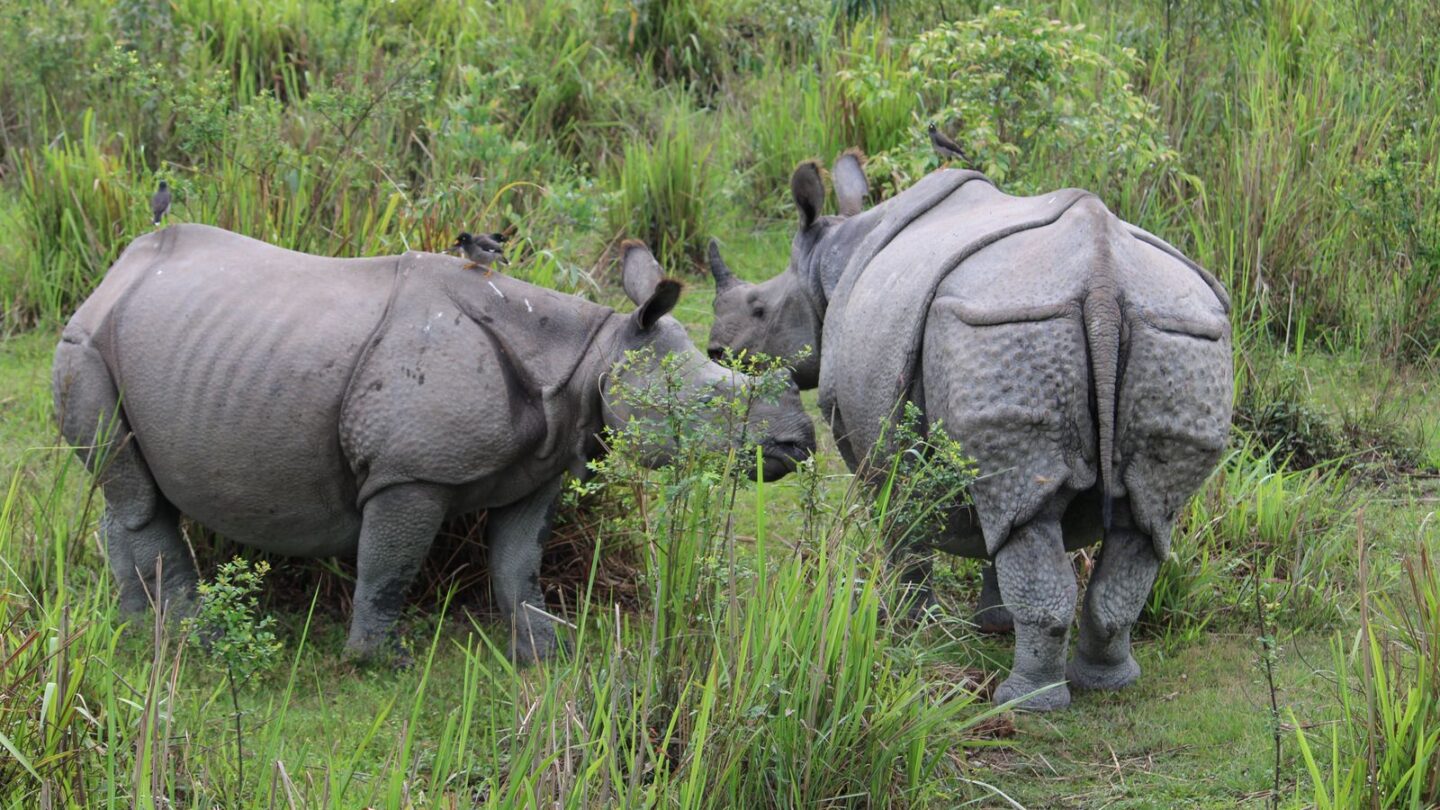
Kaziranga National Park is a UNESCO World Heritage Site on the south bank of the Brahmaputra in Assam, and it holds the world’s largest population of the Indian one-horned rhinoceros. The 2022 census counted 2,613 rhinos there. The park covers roughly 1,090 sq km, normally opens to tourists from October to about late May, and sits about 210 km by road from Guwahati.
Kaziranga became a reserve forest in 1905, a national park in 1974 and a tiger reserve in 2006, while UNESCO listed it in 1985. Today Kaziranga National Park draws several lakh visitors each season, so a little planning matters. This guide covers ranges, fees, routes, wildlife, stays and rules, and it links to our detailed safari and transport guides.
Key takeaways
- Kaziranga National Park was inscribed as a UNESCO World Heritage Site in 1985 and became a tiger reserve in 2006.
- The 2022 census counted 2,613 one-horned rhinos, up by about 200 from 2018.
- The park usually welcomes tourists from October to late May and closes for the monsoon flood season.
- Tourists use four ranges: Central (Kohora), Western (Bagori), Eastern (Agaratoli) and Burapahar.
- Indian visitors need no Inner Line Permit, but every visitor needs a safari slot and original photo ID.
Kaziranga National Park at a glance
| Detail | Information |
|---|---|
| Location | Golaghat, Nagaon and Sonitpur districts, Assam, on the Brahmaputra floodplain |
| Area | About 1,090 sq km including additions; the original core is about 378 sq km |
| Status | National park (1974), tiger reserve (2006), UNESCO World Heritage Site (1985) |
| Star species | Indian one-horned rhino, 2,613 counted in 2022 |
| Tourist ranges | Kohora, Bagori, Agaratoli, Burapahar |
| Usual tourist season | October to late May; closed June to September |
| Nearest airport | Jorhat, about 105 km from Kohora |
| Permit | No Inner Line Permit for Assam |
History and status of Kaziranga National Park
The area became a reserve forest on 1 June 1905, after early protection efforts to save the rhino from hunting. It turned into a wildlife sanctuary in 1950 and gained national park status on 11 February 1974. Furthermore, the government declared it a tiger reserve in 2006.
UNESCO added Kaziranga National Park to the World Heritage list in 1985, citing its grassland ecosystems and rhino population. In contrast to many parks, Kaziranga is a floodplain. Consequently, its tall elephant grass, wetlands and scattered forest patches shift every year with the river.
The park spreads across Golaghat, Nagaon and Sonitpur districts. Our guide to the districts of Assam shows how these districts fit into the state map. In addition, Bokakhat serves as the park’s main town and headquarters.
Wildlife in Kaziranga National Park
The one-horned rhino is the headline species. The 2022 census counted 2,613 animals in the park, about 200 more than in 2018. Moreover, the International Rhino Foundation’s 2026 report says Assam recorded no known rhino poaching in 2025, and Assam holds roughly 80 per cent of the world’s one-horned rhinos.
However, Kaziranga National Park offers far more than rhinos. Survey figures vary by year, so treat the numbers below as guides.
| Species | What visitors can expect |
|---|---|
| Indian one-horned rhino | Seen on most drives, especially in Bagori and Kohora |
| Asian elephant | Herds are common near the wetlands and forest edges |
| Wild water buffalo | Large herds; Kaziranga holds a major share of the world population |
| Eastern swamp deer | Seen on open grassland, often in winter |
| Hog deer | Very common and easy to spot in tall grass |
| Bengal tiger | Present in good numbers, but sightings are rare |
| Gangetic dolphin | Found in the Brahmaputra; not seen on standard drives |
The tiger reserve inside Kaziranga National Park has a high tiger density. A state count in 2017 put the number at about 104, though newer estimates differ, so confirm current figures with the park.
Birds of Kaziranga
BirdLife International lists the park as an Important Bird Area, and more than 450 species have been recorded. Winter brings migratory ducks, geese and waders to the wetlands. Similarly, resident birds such as the great Indian hornbill, pelicans and storks are easy to see in the Eastern range near Agaratoli. Serious birders should carry binoculars and book at least one Eastern range drive.
Best time to visit Kaziranga National Park
The best time to visit Kaziranga National Park is November to April. Days stay dry and cool, animals gather near water and the grass is easier to see over. In contrast, monsoon floods cover a large part of the park between June and September, and the authorities close it to tourists.
| Month | Park status | What to expect |
|---|---|---|
| October | Reopening range by range | Tall grass, some tracks still closed |
| November to February | Open | Cool, foggy mornings, peak crowds and prices |
| March to April | Open | Warmer, burnt grass, clear rhino views |
| May | Open until closure | Hot and humid, pre-monsoon showers |
| June to September | Closed | Floods; animals move to higher ground |
In 2026 the park closed to jeep safaris after 28 May, and officials were preparing an October 2026 reopening. Meanwhile, the exact opening date can move with road repairs, so check for official notices. For the wider region, see our best time to visit Northeast India guide.
Zones and ranges of Kaziranga National Park
Kaziranga has five administrative ranges, but tourists normally use four. The Northern range lies across the river at Biswanath and is not a regular safari zone. Therefore, choose your ranges by interest.
| Range | Gate | Best for |
|---|---|---|
| Central | Kohora | Main hub, most hotels, busiest trail |
| Western | Bagori | Open grassland and reliable rhino sightings |
| Eastern | Agaratoli | Birds and wetlands, especially in winter |
| Burapahar | Ghorakati | Hilly forest and fewer vehicles |
Kohora lies about 20 km west of Bokakhat. Bagori sits roughly 12 km west of Kohora, and Agaratoli is about 4 km north-east of Bokakhat. Burapahar lies about 25 km west of Bagori. Our Kaziranga safari booking guide covers slots and booking steps in detail.
Safaris and fees at Kaziranga National Park
Visitors see the park by jeep or, at dawn, by elephant. Walking inside the park is not allowed, apart from a few marked watchtowers. The jeep seats up to six passengers, so groups share the cost.
| Cost item | Indian visitors (approx.) | Foreign visitors (approx.) |
|---|---|---|
| Park entry per person | About ₹100 | About ₹650 |
| Jeep per vehicle, per safari | Roughly ₹3,000 to ₹5,500 by range | Roughly ₹7,000 to ₹9,000 |
| Elephant safari per person | Roughly ₹1,000 to ₹1,800 | Roughly ₹2,500 to ₹3,800 |
| Road toll | Around ₹300 per vehicle | Around ₹300 per vehicle |
Assam’s Forest Minister said in August 2026 that safari rates had not changed for about 10 years and that a hike was under consideration. However, secondary reports say the Chief Minister later ruled out any increase for 2026-27. Therefore, confirm the final amounts on the official booking channel or with your hotel before you pay.
Jeeps usually run in a morning slot from about 7 to 7:30 am and an afternoon slot from about 1:30 pm. Elephant rides start around 5:30 am and last about an hour.
How to reach Kaziranga National Park
The park sits along NH715, formerly NH37, about 40 km long along the southern boundary. Most travellers heading to Kaziranga National Park arrive from Guwahati or Jorhat.
| From | Approx. distance to Kohora | Approx. time |
|---|---|---|
| Jorhat airport | About 105 km | About 2 hours |
| Tezpur | About 90 km | About 2 hours |
| Guwahati railway station | About 210 km | About 4 to 5 hours |
| Guwahati airport | About 250 km | About 5 hours |
| Golaghat | About 50 km | About 1 to 1.5 hours |
Furkating is a useful railhead for some trains, while Guwahati has the widest choice. Additionally, ASTC and private buses on the Guwahati to Jorhat corridor stop at Kohora. A taxi offers the most flexibility for dawn safaris.
Traffic near the park deserves attention. In February 2024 the National Board for Wildlife approved a roughly 35 km elevated corridor along NH715 with strict wildlife conditions. Consequently, construction and diversions may affect travel times, so ask your driver about current road conditions.
Where to stay near Kaziranga National Park
Most lodges near Kaziranga National Park cluster around Kohora on NH715, and a few sit near Bagori and Agaratoli. Rates vary widely, from budget guesthouses to jungle resorts, and winter prices rise sharply.
- Kohora belt: the most choice, closest to the Central range gate and the elephant safari point.
- Bagori side: quieter resorts with quick access to the Western range.
- Bokakhat and Golaghat: cheaper rooms, but a longer drive to the gates.
- Tea estate stays: several estates in Golaghat and Jorhat offer bungalow-style rooms.
Book at least two to four weeks ahead for December, January and public holidays. Moreover, ask whether the hotel includes jeep booking, and request an itemised quote.
Rules and safety inside Kaziranga National Park
Rangers enforce the rules strictly, because Kaziranga National Park protects large and unpredictable animals.
- Stay inside the jeep except at designated watchtowers.
- Do not feed animals, litter, shout or play music.
- Wear muted colours such as green, brown or khaki.
- Carry original photo ID; foreign visitors need a passport and visa.
- Expect phone limits in remote or core areas; formal guidelines were still awaiting notification in 2026.
- Follow speed limits on NH715, because animals cross the road, especially during floods.
Assam does not require an Inner Line Permit. However, if you continue to Arunachal Pradesh, Nagaland or Mizoram, read our inner line permit guide first.
Sample itineraries for Kaziranga National Park
Two nights give enough time for three or four safaris without rushing.
| Plan | Day 1 | Day 2 | Day 3 |
|---|---|---|---|
| Two nights | Arrive; afternoon jeep in Kohora | Dawn elephant ride; morning jeep in Bagori; Agaratoli in the afternoon | Morning jeep in Burapahar; depart |
| One night | Arrive by noon; afternoon jeep in Kohora | Morning jeep in Bagori; depart | Not needed |
Many travellers combine Kaziranga National Park with the Arunachal route through Tezpur and Bhalukpong. Our Guwahati to Tawang distance guide explains that road stage by stage. Similarly, the Seven Sisters of India overview helps you plan a longer regional circuit.
Common mistakes to avoid
- Visiting in monsoon: the park stays closed from June to September.
- Choosing one range only: combine Bagori for rhinos with Agaratoli for birds.
- Booking on look-alike websites: confirm you are on an Assam government channel.
- Arriving late: rangers rarely wait once a slot starts.
- Packing light for winter: dawn safaris can be cold and foggy from December to February.
- Expecting tigers: sightings are rare, so treat any tiger as a bonus.
Furthermore, bring binoculars and a zoom lens of at least 200 mm.
Frequently asked questions
Where is Kaziranga National Park located?
Kaziranga National Park lies on the south bank of the Brahmaputra in Assam, across Golaghat, Nagaon and Sonitpur districts. Bokakhat is the main town, and Kohora is the tourist hub. Kaziranga National Park is about 210 km from Guwahati railway station and roughly 105 km from Jorhat airport, along NH715.
How many rhinos does Kaziranga have?
The 2022 rhino census counted 2,613 one-horned rhinos in Kaziranga National Park, about 200 more than in 2018. This is the world’s largest single population of the species. Numbers change with floods and breeding, so newer counts may differ. Check forest department announcements for updated figures.
When is Kaziranga open for tourists?
The park usually opens in October and stays open until about late May, with jeep safaris in most ranges. Elephant safaris often start around 1 November. It closes from June to September because of monsoon floods. Reopening dates shift with road repairs, so confirm before booking travel.
What is the best month to see rhinos?
November to April is the best period, and March and April often give clear views because grass is shorter. Rhinos appear on most drives in Bagori and Kohora. December and January are the busiest months, so book early. Foggy mornings can reduce visibility at dawn.
Do I need a permit to visit Kaziranga?
Indian citizens do not need an Inner Line Permit for Assam. You need a valid safari slot, the entry ticket and original photo ID. Foreign nationals should carry a passport and visa. An ILP applies only if you continue to states such as Arunachal Pradesh, Nagaland or Mizoram.
How much does a jeep safari cost?
A private jeep for Indian visitors usually costs roughly ₹3,000 to ₹5,500 per safari, depending on the range, and the jeep carries up to six people. Foreign visitors pay more. Entry, toll and camera fees are extra. Rates may change, so confirm the amount when you book.
Which is the best range in Kaziranga?
No single range suits everyone. Bagori gives open grassland and dependable rhino views, while Kohora offers the easiest access and most hotels. Agaratoli suits birders, and Burapahar offers quieter forest drives. Most visitors combine two or three ranges over two nights.
How many days are enough for Kaziranga?
For Kaziranga National Park, two nights work well, allowing three or four safaris across different ranges. A single night allows only two drives and a rushed schedule. Birders and photographers may want three nights. Add extra time if your Kaziranga National Park trip includes the orchid park near Kohora.
Plan your Kaziranga National Park trip with confidence
Kaziranga National Park rewards early planners who pick two or three ranges, travel between November and April and carry original ID. Above all, confirm dates and fees on official channels, because the 2026-27 season brings online booking and possible changes.
Explore more trips in Northeast Travel or return to the Frontier News homepage.
Related guides
More in Northeast Travel →
Northeast Travel
Krang Suri Waterfall: Entry Fee, Swimming and Best Time to Visit
Northeast Travel
Pelling Travel Guide: Kanchenjunga Views, Sights and Itinerary
Northeast Travel