Mawlynnong Village: Asia’s Cleanest Village Guide for 2026
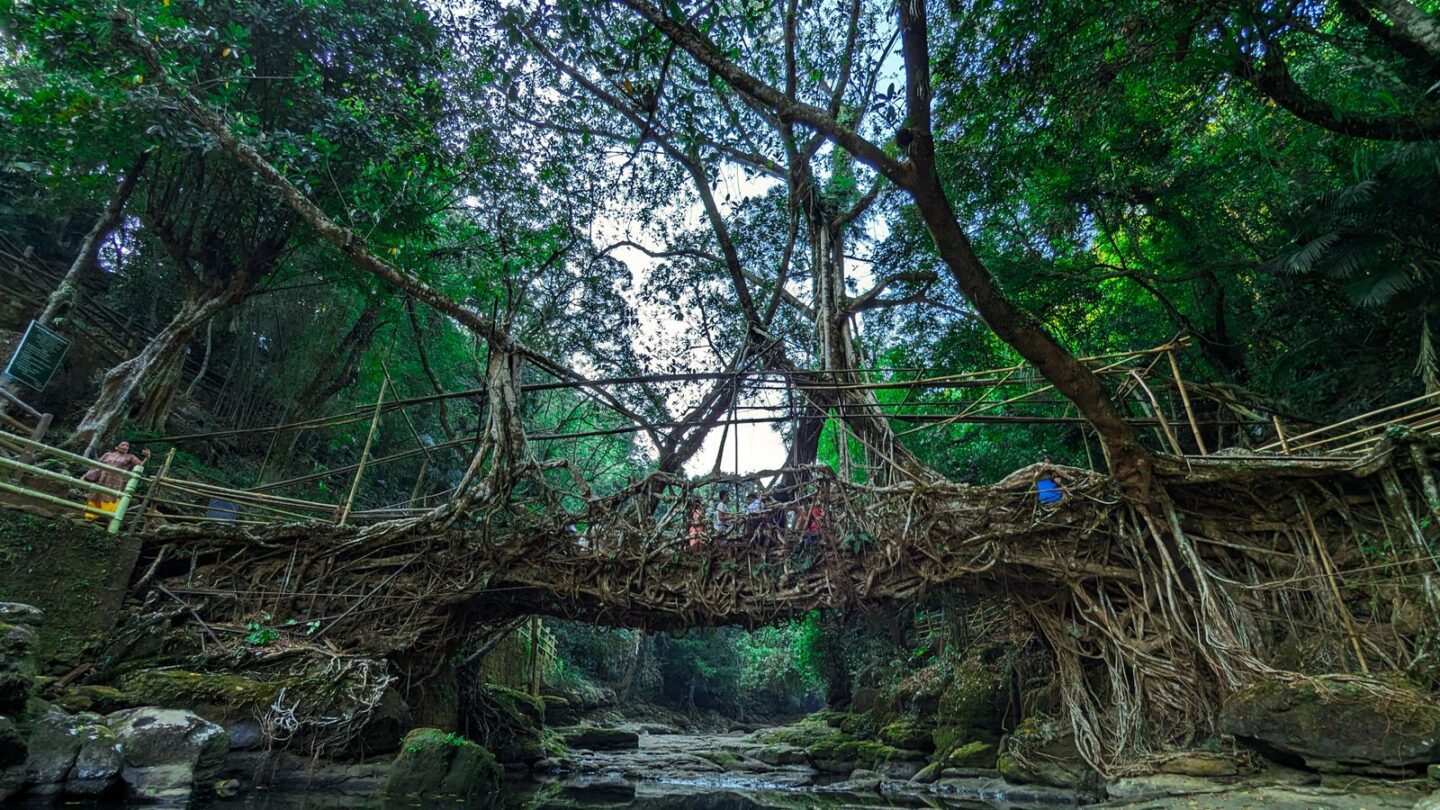
Mawlynnong is a small Khasi village in the East Khasi Hills of Meghalaya, famous as “Asia’s cleanest village” after Discover India magazine gave it that tag in 2003. It sits on the Bangladesh border, about 76 to 90 km from Shillong, or roughly 2.5 to 3 hours by road. Since January 2026, the village has closed to day-trippers on Sundays.
The village draws visitors for its swept lanes, bamboo dustbins and flower-lined homes. Nearby, the Riwai living root bridge, a bamboo Sky View tower and a curious balancing rock fill a half-day. Additionally, the clear Umngot River at Dawki lies a short drive away, so most travellers combine the two.
Key takeaways
- Mawlynnong is in the Pynursla block of East Khasi Hills district, near the India–Bangladesh border.
- Meghalaya Tourism puts it 76 km from Shillong; many operators quote about 90 km by the usual route.
- The village council closed Mawlynnong to one-day tourists on Sundays from January 2026.
- Visitors usually pay a village entry fee of about ₹100, plus small charges at each attraction.
- Meghalaya needs no Inner Line Permit, but homestays must register every guest on the state tourism app.
Mawlynnong at a glance
| Detail | Information |
|---|---|
| State and district | Meghalaya, East Khasi Hills (Pynursla block) |
| Famous as | “Asia’s cleanest village” (Discover India, 2003) |
| Distance from Shillong | About 76 to 90 km, roughly 2.5 to 3 hours |
| Distance from Guwahati | Roughly 170 to 190 km, about 5 to 6 hours |
| Distance from Dawki | Roughly 17 to 30 km, under an hour |
| People | Khasi community, with a matrilineal family system |
| Entry fee | Reportedly about ₹100 per person, plus parking |
| Sunday rule | Closed to day-trippers since January 2026 |
| Permit | No ILP for Meghalaya; guest registration applies |
| Best time | October to April; monsoon for greenery |
Why Mawlynnong is called Asia’s cleanest village
Mawlynnong earned its famous tag in 2003, when Discover India magazine named it the cleanest village in Asia. Reports say it was also called the cleanest village in India in 2005. The title turned a quiet farming settlement into one of Meghalaya’s best-known stops.
The label reflects habits, not a single campaign. Residents sweep paths each morning, and bamboo baskets serve as dustbins along almost every lane. Organic waste goes into pits and becomes manure. As a result, the village looks tidy even after busy weekends.
According to Incredible India, every household has had to keep a working toilet and bamboo dustbins since 2007. Smoking and plastic bags are banned. Furthermore, the village encourages rainwater harvesting. Similarly, children learn early to pick up litter they see on the path.
Community and daily life
Mawlynnong is home to around 90 to 100 Khasi households, according to published counts. Most residents are Christian, and the Church of the Epiphany, a building more than a century old, stands near the centre. Meanwhile, the Khasi matrilineal system means property usually passes to the youngest daughter.
Farming still anchors the local economy. Betel nut is the main crop, alongside broom grass, pineapple and other fruit. However, tourism now adds a large share of income through homestays, food stalls and guiding.
How to reach Mawlynnong
Most visitors reach Mawlynnong from Shillong. The road heads south-east towards Pynursla and the Dawki highway, then turns off onto a smaller village road. The last section is narrow and winding, so drivers take it slowly.
Guwahati’s Lokpriya Gopinath Bordoloi Airport and Guwahati railway station are the main gateways. From Guwahati, travellers first cover about 100 km to Shillong. For that leg, see our Guwahati to Shillong distance guide. Shillong’s own Umroi airport handles fewer flights, so check schedules before you rely on it.
| Starting point | Approximate distance to Mawlynnong | Usual travel time |
|---|---|---|
| Shillong | 76 to 90 km | 2.5 to 3 hours |
| Guwahati | 170 to 190 km | 5 to 6 hours |
| Dawki | 17 to 30 km | 30 to 60 minutes |
| Sohra (Cherrapunji) | About 90 km | About 3 hours |
| Riwai root bridge | 2 to 3 km | 10 minutes by car |
Distances vary because sources measure from different points. Therefore, treat the figures as planning ranges and confirm with your driver.
Taxi, shared sumo or bus
A private taxi offers the easiest Mawlynnong trip. Shillong operators often quote roughly ₹3,000 to ₹4,000 for a day trip that also covers Dawki. Fares change with season, vehicle and stops, so agree the price before you start.
Shared sumos leave from the Bara Bazar area of Shillong, and a few serve Mawlynnong directly. Alternatively, buses run from Shillong to Dawki, and travellers then take a shared or reserved cab to the village. Consequently, public transport works but needs early starts and patience. Also note that Meghalaya tightened rules on private vehicles carrying paying tourists in 2025, so use registered taxis.
Things to do in Mawlynnong
Mawlynnong itself takes about an hour to walk around. However, most visitors spend half a day once they add the nearby sights. Start early, because tour groups arrive by late morning.
Walk the village lanes
Stone paths wind between gardens, bamboo fences and neat homes. Flowers and orchids line many verandas. Additionally, bamboo dustbins stand every few metres, which shows how the system works in practice. Walk quietly, keep to paths and ask before you photograph residents.
Climb the Sky View bamboo tower
The Sky View, also called the Sky Walk or Nohwet Viewpoint, is a tall tower built from bamboo poles and rope. Builders tied it to living trees without nails. Some guides put its height at about 85 feet. On a clear day, the platform looks out over the plains of Bangladesh.
Visit the Riwai living root bridge
The Riwai living root bridge lies about 2 to 3 km from Mawlynnong. Khasi villagers shaped it over many years from the aerial roots of rubber fig trees. A short walk of a few hundred metres, with steps, leads down from the parking area. Meghalaya Tourism calls it the Nohwet living root bridge, since it links neighbouring villages.
See the balancing rock
The balancing rock sits on the edge of the village, about 1 km from the centre. A large boulder rests on a much smaller stone and has stayed in place for generations. Locals tell differing stories about its past. The site is fenced and takes about 30 minutes to see.
Mawlynnong entry fees and costs
Fees in Mawlynnong are collected by the village and nearby communities, not by a state department. As a result, they change without notice and rarely appear online. The figures below come from travel reports in 2023 to 2026, so treat them as guides only.
| Item | Approximate cost | Notes |
|---|---|---|
| Village entry | About ₹100 per person | Collected at the entrance |
| Parking | Small fee per vehicle | Varies by vehicle size |
| Sky View tower | About ₹10 to ₹30 | Paid at the tower |
| Riwai root bridge | About ₹30 per person | Collected by Riwai village |
| Balancing rock | Free to about ₹20 | Reports differ |
| Homestay room | About ₹1,500 to ₹5,000 a night | Some include meals |
| Home-cooked meal | About ₹200 to ₹400 per person | Rice, dal, pork or chicken |
Carry enough cash, because ATMs are scarce and mobile networks can be patchy. Moreover, UPI may fail when signals drop. Keep small notes for the many separate counters.
Mawlynnong Sunday rule for 2026
In late 2025, the Mawlynnong village council, or Dorbar, announced that the village would close to one-day tourists on Sundays. The rule began in January 2026. Restaurants, shops, stalls and public toilets stay shut on Sundays.
The council said most villagers spend Sunday at church services. Therefore, they cannot offer proper hospitality that day. In contrast, overnight guests may stay. The exemption covers visitors already checked in from earlier in the week and those checking in on Sunday evening. Their homestays arrange their meals and services.
| Day | Day-trippers | Overnight homestay guests |
|---|---|---|
| Monday to Saturday | Allowed | Allowed |
| Sunday | Not allowed | Allowed if already checked in or checking in that evening |
Plan your Mawlynnong day trip for a weekday or Saturday. Saturdays are busy, however, so a weekday visit feels calmer. If Sunday is your only free day, book an overnight homestay instead.
Permits and the Meghalaya guest registration rule
Indian citizens do not need an Inner Line Permit for Meghalaya. For the states that do, see our Inner Line Permit guide. Foreign nationals can visit Mawlynnong too, but they should carry their passport and visa.
In June 2025, the Meghalaya government ordered all homestays, resorts and families hosting paying guests to register every visitor. Hosts use the state tourism app, and the data is shared with the police. Consequently, carry a valid photo ID and expect your host to record your details at check-in.
Staying overnight in Mawlynnong
Staying the night gives you the village at its quietest. Day groups leave by late afternoon, and the lanes settle down. Furthermore, an overnight stay lets you visit the root bridge and Sky View early, before crowds arrive.
Mawlynnong has dozens of homestays but no large hotels. Reports in 2025 counted around 34 homestays, with rooms from about ₹1,500 to ₹5,000 a night. Many offer simple rooms with attached bathrooms, and some sit in raised bamboo cottages.
- Book ahead for October to December and long weekends.
- Confirm meals, since few eateries stay open late.
- Ask about hot water in winter, when nights turn cool.
- Check the Sunday plan if your stay covers a Sunday.
Best time to visit Mawlynnong
Mawlynnong is open all year, and Meghalaya Tourism says post-monsoon and winter suit outdoor sightseeing best. October to April brings drier paths and clearer views from the Sky View tower. For a wider regional view, read our guide to the best time to visit Northeast India.
| Season | Months | What to expect |
|---|---|---|
| Post-monsoon | October to November | Green hills, clear skies, peak crowds |
| Winter | December to February | Cool, dry, good views of Bangladesh |
| Spring | March to May | Warm days, fruit trees in bloom |
| Monsoon | June to September | Heavy rain, lush scenery, slippery steps |
The monsoon makes the root bridge and forests glow green. However, heavy rain can cause landslides on the approach roads. As a result, keep spare time in your plans from June to September.
Mawlynnong and Dawki: a one-day plan
Mawlynnong pairs naturally with Dawki, whose Umngot River is famous for its clear water. Both sit off the same Shillong–Dawki road. Our Dawki travel guide covers boating, fees and timings in detail.
- Leave Shillong by 7 am to beat traffic and tour buses.
- Reach Mawlynnong by about 9:30 am and walk the village lanes.
- Climb the Sky View tower and see the balancing rock.
- Drive to Riwai and walk down to the living root bridge.
- Continue to Dawki for lunch and a boat ride on the Umngot.
- Return to Shillong by early evening, before dark.
This plan needs a full day and a private taxi. Alternatively, stay a night in Mawlynnong and see Dawki the next morning, when the river is calmer. If you have more days, add Sohra; our Cherrapunji travel guide lists its waterfalls and caves.
Responsible travel tips for Mawlynnong
Mawlynnong’s reputation depends on visitors following its rules. Small lapses add up when hundreds of people arrive on a busy day.
- Carry all non-biodegradable waste back with you, including wrappers and bottles.
- Do not smoke, and avoid bringing plastic bags into the village.
- Use the bamboo dustbins only for small, clean waste.
- Respect private homes; do not enter gardens or photograph residents without asking.
- Dress modestly near the church and during services.
- Pay fees at official counters and keep your receipts.
Frequently asked questions
Why is Mawlynnong called the cleanest village in Asia?
Discover India magazine named Mawlynnong Asia’s cleanest village in 2003. The title reflects daily community habits. Residents sweep lanes, use bamboo dustbins and turn organic waste into manure. Smoking and plastic bags are banned, and every household has had to keep a toilet and dustbins since 2007, according to Incredible India.
How far is Mawlynnong from Shillong?
Meghalaya Tourism lists Mawlynnong as 76 km from Shillong, while many operators quote about 90 km by the usual route. The drive normally takes 2.5 to 3 hours via the Pynursla side of the Dawki road. The final stretch is narrow, so allow extra time, especially in the monsoon.
Is Mawlynnong open to tourists on Sundays?
Not for day visits. The village council closed Mawlynnong to one-day tourists on Sundays from January 2026, because most residents attend church. Restaurants, shops, stalls and public toilets stay shut that day. However, guests staying overnight in homestays may remain, and those checking in on Sunday evening are also allowed.
What is the entry fee for Mawlynnong?
Travel reports in 2023 to 2026 put the village entry fee at about ₹100 per person, plus a parking charge. Separate small fees apply at the Sky View tower, the Riwai root bridge and sometimes the balancing rock. Rates change without notice, so carry cash and confirm the amount at each counter.
How far is the living root bridge from Mawlynnong?
The Riwai living root bridge lies about 2 to 3 km from the village. Most visitors drive there in about 10 minutes, then walk a few hundred metres down steps to the bridge. The bridge grew from rubber fig roots over many years, and Riwai villagers usually collect a fee of around ₹30.
Can I visit Mawlynnong and Dawki in one day?
Yes. Many travellers combine both on a single day trip from Shillong. Leave early, spend the morning in the village and at the Riwai root bridge, then drive to Dawki for lunch and boating. The two sit roughly 17 to 30 km apart, depending on the route. Return before dark on the hill roads.
Do I need a permit to visit Mawlynnong?
No permit is needed. Meghalaya does not use the Inner Line Permit system. However, since June 2025 the state has required homestays and resorts to register every guest through the state tourism app. Therefore, carry a valid photo ID. Foreign visitors should keep their passport and visa with them.
Plan a calm visit to Asia’s cleanest village
Mawlynnong rewards travellers who arrive early, follow its rules and avoid Sundays. Pair it with the Riwai root bridge and Dawki for a full day, or stay a night for a quieter experience. Above all, leave the village as clean as you found it. If your trip runs into late autumn, the Khasi harvest celebrations in our Nongkrem Dance guide add a cultural stop.
Explore more destinations in Northeast Travel or visit the Frontier News homepage.
Related guides
More in Northeast Travel →
Northeast Travel
Zuluk Travel Guide 2026: Silk Route, Permit and Loops
Northeast Travel
Kamakhya Temple Guide 2026: Timings, Darshan and History
Northeast Travel