Krang Suri Waterfall: Entry Fee, Swimming and Best Time to Visit
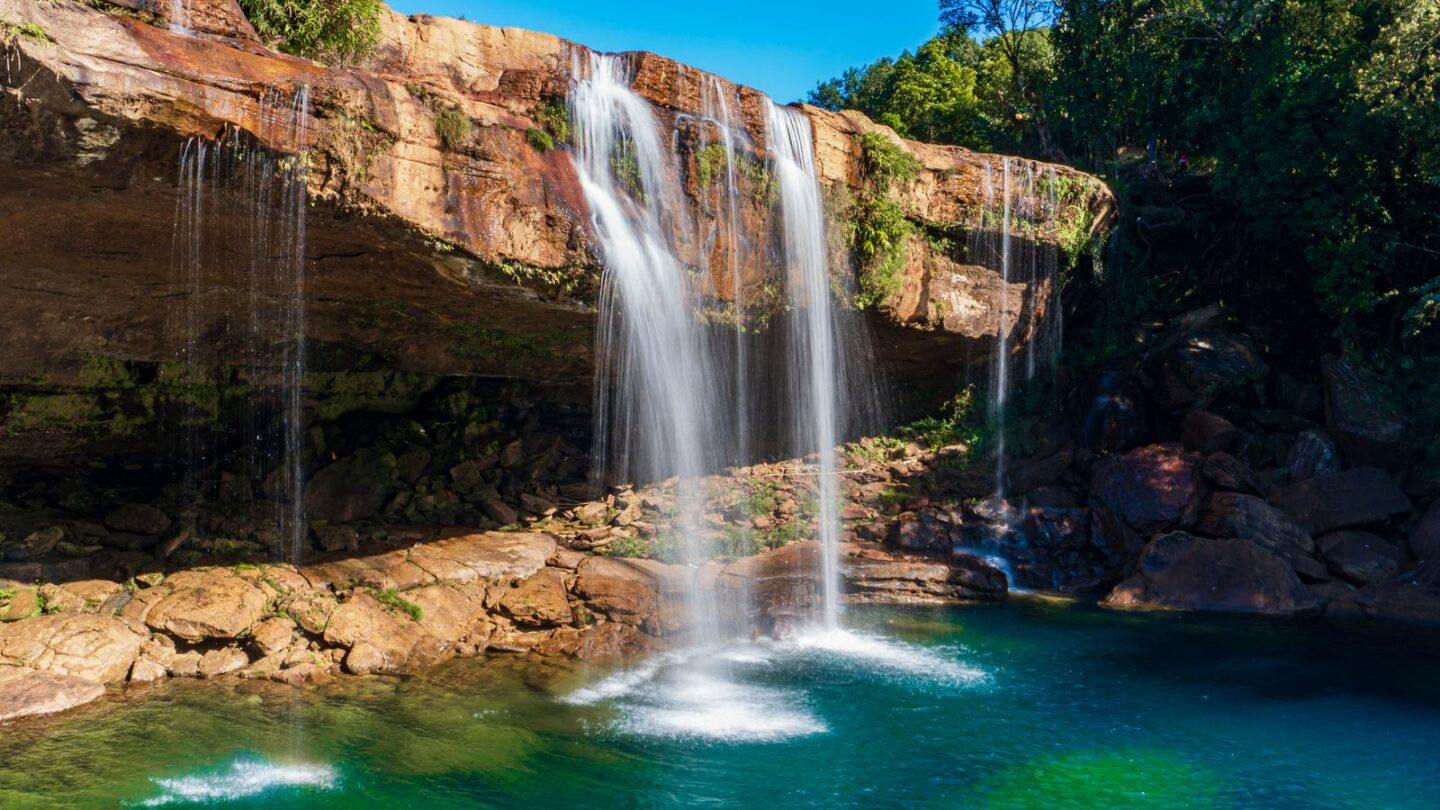
The Krang Suri waterfall is a forest waterfall near Amlarem in Meghalaya’s West Jaintia Hills, famous for its turquoise plunge pool. Meghalaya Tourism places it about 91 km from Shillong and roughly 30 minutes by road from Jowai. Visitors pay a small entry fee, walk down a few hundred steps and can swim in the pool wearing a hired life jacket.
Meghalaya Tourism spells the name Krangshuri, while signboards and travellers often write Krang Suri or Krang Shuri. The Krang Suri waterfall is far less crowded than the big falls of Sohra. Its colour and calm pool make it a favourite with swimmers and photographers. This guide covers fees, swimming rules, the route, the best months and nearby places.
Key takeaways
- The Krang Suri waterfall lies about 1 km from Amlarem town and about 30 km from Jowai.
- Meghalaya Tourism lists it at 91 km from Shillong, usually a 2.5 to 3-hour drive.
- Visitors report an entry fee of about ₹40 to ₹50 and life-jacket hire of about ₹100.
- Swimming is allowed in the plunge pool, and a life jacket is required.
- Meghalaya Tourism recommends October to May, when the water turns its brightest blue.
Krang Suri waterfall at a glance
| Detail | Information |
|---|---|
| Official spelling | Krangshuri Falls (Meghalaya Tourism) |
| Location | Near Amlarem, West Jaintia Hills, Meghalaya |
| Distance from Shillong | About 91 km (2.5–3 hours) |
| Distance from Jowai | About 30 km (30–45 minutes) |
| Distance from Dawki | Roughly 30 km |
| Distance from Guwahati airport | About 200 km |
| Entry fee | About ₹40–₹50 per person (visitor reports) |
| Life jacket | About ₹100 (visitor reports) |
| Usual hours | Roughly 7–9 am to 5–6 pm |
| Walk to the falls | A few hundred steps, 10–20 minutes down |
| Best time | October to May |
| Permit | No Inner Line Permit needed for Meghalaya |
Meghalaya does not use the Inner Line Permit system. Therefore, Indian visitors need no permit. For states that do, see our Inner Line Permit guide for Northeast India.
What makes the Krang Suri waterfall special
The fall pours over a rock ledge into a deep, round pool ringed by forest. In the dry months, the water turns a striking shade of blue. Meghalaya Tourism notes that the colour looks best between about 11 am and 2 pm, when sunlight reaches the pool.
Height estimates vary widely between sources, from roughly 12 m to 30 m. No official figure is published. However, the fall is wide rather than tall, and its setting matters more than its size. Moreover, smaller cascades and a stone footbridge over a stream line the path down.
The Amlarem Civil Sub-Division describes the fall as one of the most popular in the state. Local lore also mentions a cave behind the curtain of water. According to the sub-division’s tourism page, people once used it as an armoury after clan conflicts.
Krang Suri waterfall entry fee and charges
The local village body manages the Krang Suri waterfall and collects the fees. No official rate list appears online. Therefore, the figures below come from recent visitor reports and travel guides, and they can change.
| Charge | Typical amount | Notes |
|---|---|---|
| Entry ticket | About ₹40–₹50 per person | Paid at the gate near the parking area |
| Two-wheeler parking | About ₹20–₹50 | Varies by report |
| Car parking | About ₹50–₹100 | Varies by vehicle size |
| Life jacket | About ₹100 | Needed for swimming |
| Boat ride | Small extra charge | Mainly in the dry season |
| Zipline | About ₹400 (reported) | Subject to operation |
Carry cash in small notes, because UPI may not always work in the valley. Additionally, confirm current rates at the counter before you pay for activities.
Krang Suri waterfall timings and the walk down
Reported opening hours differ slightly. Some guides list 7 am to 6 pm, while recent visitors mention 9 am to 5 pm. As a result, plan to arrive by mid-morning and leave well before dusk.
From the parking area, a paved path and stone steps lead down through the forest. Reports of the step count range from about 200 to more than 350. Most people reach the pool in 10 to 20 minutes. The climb back takes longer, often around 25 to 30 minutes.
Facilities at the site
- Changing rooms: Separate rooms for men and women sit near the pool.
- Washrooms: Basic toilets are available.
- Food stalls: Small stalls near the parking area sell snacks, tea and noodles.
- Viewpoint: A platform on the way down gives a top view of the fall.
The path has railings in places, but wet steps can be slippery. Consequently, the walk is tiring for elderly visitors and is not suitable for wheelchairs.
Swimming at the Krang Suri waterfall
Swimming is the main draw of the Krang Suri waterfall. The pool is deep and cold, and the rocks beneath the water are slippery. Meghalaya Tourism confirms that life jackets are available for rent, and visitors report that wearing one is compulsory.
Follow these rules and safety habits:
- Hire a life jacket before entering the water, even if you swim well.
- Stay within the area that staff or ropes mark as safe.
- Avoid swimming directly under the falling water.
- Do not dive from rocks; depth and hidden boulders are hard to judge.
- Leave the water if the flow rises, the water turns muddy or it starts raining heavily.
- Keep children within arm’s reach at all times.
In the dry season, a paddle boat takes visitors close to the falling curtain of water. Meghalaya Tourism mentions these boat rides as a highlight. However, boating may stop when the water level rises, so ask at the site.
Best time to visit the Krang Suri waterfall
Meghalaya Tourism recommends October to May for the Krang Suri waterfall. In these months, the weather stays pleasant and the pool shows its brightest blue. In contrast, the monsoon turns the water a murky green-brown and makes swimming risky.
| Months | Water colour | Flow | Swimming |
|---|---|---|---|
| October–November | Clearing to blue | Strong but settling | Good, water cold |
| December–February | Deep turquoise | Gentle | Possible, very cold |
| March–May | Bright turquoise | Moderate | Best months for most swimmers |
| June–September | Often muddy | Powerful | Risky; may be restricted |
During heavy monsoon rain, local authorities can restrict access or swimming at waterfalls. Therefore, check with your driver or hotel in Jowai before setting out between June and September. For regional weather planning, see our best time to visit Northeast India guide.
How to reach the Krang Suri waterfall
Most travellers start from Shillong or Jowai. The route follows NH6 east from Shillong to Jowai, then turns south towards Amlarem on the Jowai–Dawki road.
| From | Approx. distance | Approx. time | Route |
|---|---|---|---|
| Shillong | About 85–91 km | 2.5–3 hours | NH6 to Jowai, then Amlarem road |
| Jowai | About 30 km | 30–45 minutes | Jowai–Amlarem road |
| Dawki | Roughly 30 km | About 1 hour | Dawki–Amlarem–Jowai road |
| Guwahati airport | About 200 km | 5–6 hours | Via Shillong and Jowai |
By private taxi
A private taxi from Shillong is the easiest option. Many drivers combine the Krang Suri waterfall with Jowai sights or Dawki in one long day. Fares vary with season and vehicle, so agree the route, stops and waiting time in advance. For the first leg into Meghalaya, read our Guwahati to Shillong distance guide.
By shared sumo
Shared sumos run from Shillong to Jowai, with fares often quoted around ₹100 per seat. From Jowai, you can hire a local taxi for the return trip to Amlarem and the falls. However, public transport to the falls themselves is limited. Consequently, most budget travellers still need a reserved local cab for the final stretch.
Road conditions in 2026
In June 2026, a landslide closed the direct Shillong–Dawki road near Laitlyngkot. Officials advised travellers to use the Shillong–Jowai–Amlarem–Dawki road instead, which passes close to the falls. The damaged stretch reopened on 10 August 2026, with a night closure from 10 pm to 5 am. As a result, the Amlarem route remains a useful backup to Dawki during the rains.
Places to combine with the Krang Suri waterfall
West Jaintia Hills has several sights within an hour of the Krang Suri waterfall. Pick two or three for a full day.
| Place | Approx. distance | Why visit |
|---|---|---|
| Nartiang monoliths | About 24 km from Jowai | Tall standing stones and dolmens of the Jaintia kings |
| Phe Phe Falls | About 22 km from Jowai | Two-tiered falls near Shkentalang, short hike |
| Thlumuwi stone bridge | About 11 km from Krang Suri | Old Jaintia stone bridge over the Muvi stream |
| Jowai town | About 30 km | District HQ, markets and Thadlaskein Lake nearby |
| Dawki and Shnongpdeng | Roughly 30 km | Clear Umngot River, boating and camping |
Nartiang monoliths
Meghalaya Tourism places Nartiang about 65 km from Shillong and 24 km from Jowai. The site holds menhirs, called Moo Shynrang, and flat dolmens, called Moo Kynthai. According to the West Jaintia Hills district, people raised them between about 1500 and 1835. The tallest menhir is linked to U Mar Phalyngki, a lieutenant of the Jaintia king.
Phe Phe Falls and Thlumuwi bridge
Phe Phe Falls lies near Shkentalang village, about 22 km from Jowai. A 15 to 20-minute hike leads to its two tiers and blue pools. Meanwhile, the Thlumuwi megalithic bridge spans the Muvi stream off the Jowai–Dawki road. The Amlarem sub-division says Jaintia warriors built it on an old royal route.
Dawki and the Umngot River
Dawki lies roughly 30 km south of the falls, on the India–Bangladesh border. Its clear Umngot River draws large crowds for boat rides. Our Dawki travel guide covers boating fees and the best months in detail.
Sample itineraries including the Krang Suri waterfall
Day trip from Shillong via Jowai
- Leave Shillong by 6:30 am on NH6.
- Stop at Nartiang monoliths around 8:30 am.
- Reach the Krang Suri waterfall by 10:30 am for the best light.
- Swim or take a boat ride, then eat at the stalls.
- Visit Phe Phe Falls or the Thlumuwi bridge if time allows.
- Head back to Shillong by 3 pm.
Two days with Dawki
On day one, drive from Shillong to Jowai and see Nartiang and the Krang Suri waterfall. Stay near Jowai, Amlarem or at a camp by the river. On day two, continue to Dawki and Shnongpdeng for the Umngot River. Then return to Shillong via Pynursla, or add Sohra using our Shillong to Cherrapunji distance guide.
Safety tips and common mistakes
Waterfalls in Meghalaya can change fast after rain. A few precautions make the visit safer and more pleasant.
- Do not skip the life jacket. The pool is deep and cold, and cramps can strike quickly.
- Wear shoes with grip. Steps and rocks stay wet and mossy all year.
- Visit on a weekday. Weekends and holidays bring crowds and queues for life jackets.
- Carry a change of clothes. Spray reaches far from the pool.
- Respect the site. Take your rubbish back and follow instructions from local staff.
- Carry photo ID. Meghalaya hotels and homestays must register guests through the state tourism system.
A common mistake is visiting the Krang Suri waterfall in peak monsoon and expecting blue water. Another is arriving late in the afternoon, when shadows fall over the pool. Therefore, time your visit for late morning in the dry months.
Frequently asked questions
How far is the Krang Suri waterfall from Shillong?
Meghalaya Tourism lists the Krang Suri waterfall at 91 km from Shillong, while travel guides quote 85 to 90 km. The drive usually takes 2.5 to 3 hours via NH6 and Jowai, then south towards Amlarem. The falls lie about 1 km from Amlarem town. Start early to reach the pool in the late-morning light.
What is the entry fee for the Krang Suri waterfall?
The local body collects a small entry fee, which visitors report as about ₹40 to ₹50 per person. Parking costs extra, roughly ₹20 to ₹100 depending on the vehicle. Life-jacket hire usually costs around ₹100. No official rate list is published online, so check the current charges at the counter and carry cash.
Can you swim at the Krang Suri waterfall?
Yes. Swimming is allowed in the plunge pool at the base of the fall. Meghalaya Tourism confirms that life jackets are available for rent, and visitors report that wearing one is mandatory. The water is deep and cold, and the rocks are slippery. Avoid swimming during heavy rain, when the flow rises and the water turns muddy.
How many steps are there to the falls?
Reports vary from about 200 to more than 350 steps, plus a short walk from the parking area. Most visitors reach the pool in 10 to 20 minutes. The climb back up takes longer, often 25 to 30 minutes. The path has railings in places but can be slippery, so wear shoes with good grip.
Is Krang Suri open during the monsoon?
The site usually stays open for much of the year, but heavy rain can bring temporary restrictions on access or swimming. From June to September, the water often turns muddy and the current grows strong. Meghalaya Tourism recommends October to May instead. Check with your driver or hotel in Jowai before visiting in the rainy season.
Can Krang Suri and Dawki be covered in one day?
Yes, with an early start from Shillong. The falls lie roughly 30 km from Dawki via Amlarem. A typical plan goes Shillong to Jowai, the waterfall, then Dawki, returning via Pynursla. However, this makes a long day of 8 to 10 hours on the road and at sights. Many travellers prefer an overnight stay near Dawki.
Planning your Krang Suri waterfall trip
The Krang Suri waterfall rewards an early start and a dry-season visit. Go between October and May, carry cash for fees and life jackets, and wear shoes that grip. Pair it with Nartiang, Phe Phe Falls or Dawki for a full day in the Jaintia Hills. For Sohra’s waterfalls, see our Cherrapunji travel guide.
Explore more trips in Northeast Travel, or head back to the Frontier News homepage.
Related guides
More in Northeast Travel →
Northeast Travel
Pelling Travel Guide: Kanchenjunga Views, Sights and Itinerary
Northeast Travel
Mawlynnong Village: Asia’s Cleanest Village Guide for 2026
Northeast Travel