NEFA Full Form: The North-East Frontier Agency Explained
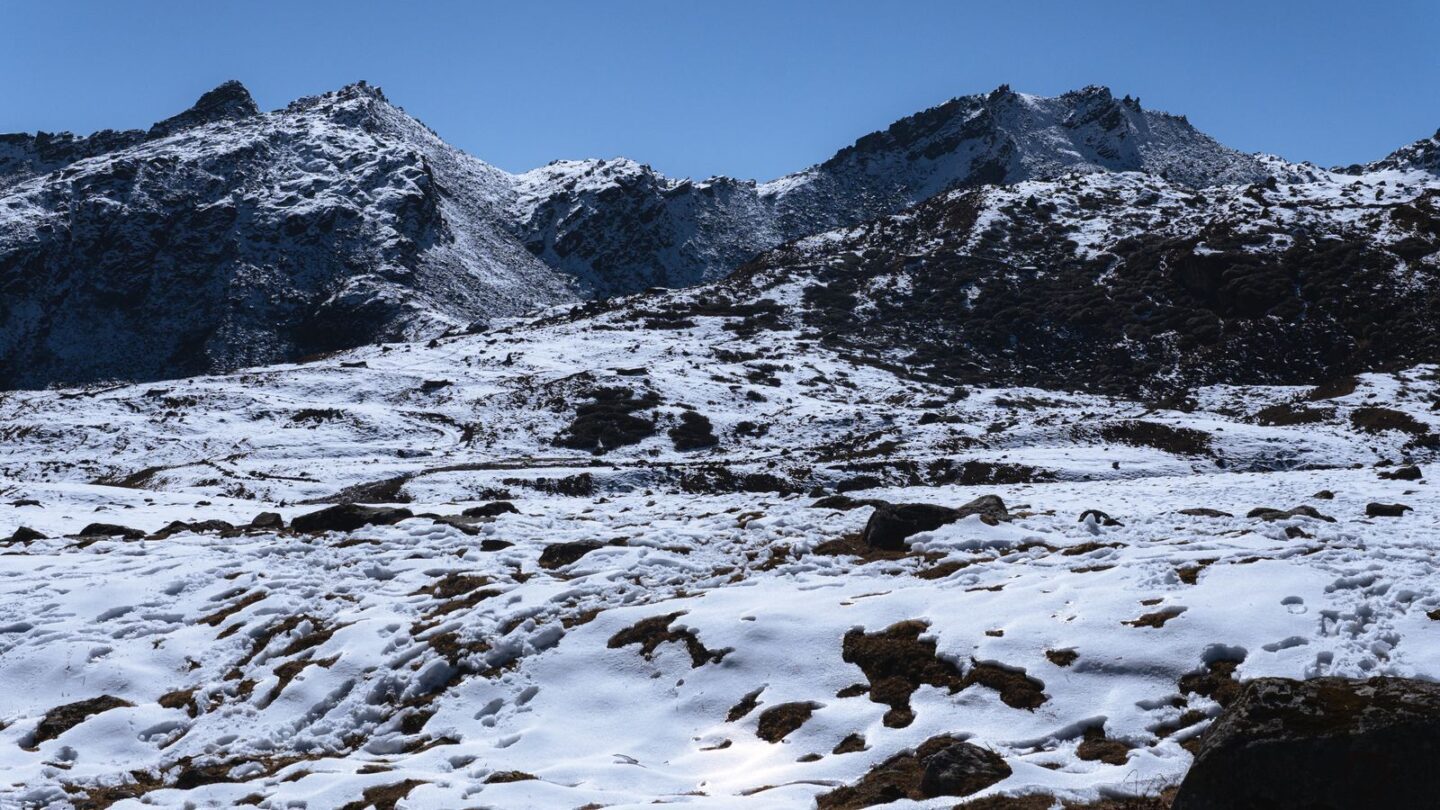
The NEFA full form is North-East Frontier Agency, the former name of the region that is now Arunachal Pradesh. NEFA was a frontier territory administered by the Governor of Assam as an agent of the President of India. In January 1972 it became the Union Territory of Arunachal Pradesh, and it gained full statehood on 20 February 1987.
The name often appears in exam questions, history books and memoirs of the 1962 war. However, the story behind it starts earlier, with British frontier tracts drawn in 1914. This guide explains what NEFA meant, how it was run and why it changed its name.
Key takeaways
- NEFA stands for North-East Frontier Agency.
- Its roots lie in the North-East Frontier Tract, created from parts of Assam in 1914.
- The North-East Frontier (Administration) Regulation, 1954, formalised the NEFA set-up.
- NEFA became the Union Territory of Arunachal Pradesh in January 1972.
- Arunachal Pradesh became a full state on 20 February 1987.
NEFA full form at a glance
| Detail | Information |
|---|---|
| NEFA full form | North-East Frontier Agency |
| Present-day name | Arunachal Pradesh |
| Origin | North-East Frontier Tract, formed in 1914 |
| NEFA name in use | From the early 1950s; formalised by the 1954 Regulation |
| Administered by | Governor of Assam, as agent of the President |
| Ministry in charge | External Affairs until 1965, then Home Affairs |
| Headquarters | Shillong, until the move to Itanagar in 1974 |
| Union Territory | January 1972, renamed Arunachal Pradesh |
| Statehood | 20 February 1987 |
| Area today | About 83,743 sq km |
What the NEFA full form means
Each word in the NEFA full form describes the territory’s role. “North-East” gives its location in the far corner of India. “Frontier” reflects its long borders with Tibet, Bhutan and Myanmar. Finally, “Agency” signals a special administrative unit rather than a normal district or state.
In practice, the territory behind the NEFA full form was constitutionally part of Assam. Nevertheless, the Assam government did not run it. Instead, the Governor of Assam administered it directly on behalf of the President. As a result, NEFA had a unique status among Indian territories.
Origins of NEFA: the North-East Frontier Tract
The history of the NEFA full form begins in British India. In 1914, the colonial government separated several tribal-majority areas from the Darrang and Lakhimpur districts of Assam. Together, these areas formed the North-East Frontier Tract (NEFT).
The same year saw the Simla Conference, where the McMahon Line was drawn between British India and Tibet. China did not accept the resulting accord. Consequently, the boundary question later shaped NEFA’s history.
How the frontier tracts evolved
| Year | Change |
|---|---|
| 1914 | NEFT formed with a Central and Eastern Section and a Western Section |
| 1919 | Sections renamed Sadiya Frontier Tract and Balipara Frontier Tract; Lakhimpur Frontier Tract added |
| 1937 | Tracts grouped as “Excluded Areas” of the Province of Assam |
| 1943 | Tirap Frontier Tract created |
| 1946 | Balipara split into the Sela Sub-Agency and the Subansiri Area |
| 1948 | Sadiya Frontier Tract split into the Abor Hills and Mishmi Hills districts |
When the NEFA name came into use
Sources differ slightly on the exact year. Some histories say the frontier units were jointly renamed the North-East Frontier Agency in 1951. Others link the name to the North-East Frontier (Administration) Regulation, 1954. Therefore, the safest summary is this: the name was in use from the early 1950s, and the 1954 Regulation formalised the structure.
The Ministry of External Affairs handled NEFA in these years. This choice reflected its sensitive international borders. Meanwhile, a new cadre called the Indian Frontier Administrative Service (IFAS) supplied officers for the region.
NEFA full form and the frontier divisions
In 1954, the frontier tracts were reorganised into frontier divisions. Five of them later became the districts of Arunachal Pradesh. Additionally, a Naga tribal area formed a sixth unit for a short time.
| Frontier division | Earlier unit | Rough area today |
|---|---|---|
| Kameng | Sela Sub-Agency of Balipara | Tawang and West Kameng region |
| Subansiri | Subansiri Area of Balipara | Subansiri districts and Ziro area |
| Siang | Abor Hills district | Siang belt around Pasighat and Along |
| Lohit | Mishmi Hills district | Lohit and Dibang valleys |
| Tirap | Tirap Frontier Tract | Tirap, Changlang and Longding area |
| Tuensang | Naga tribal area | Joined the Naga Hills district in 1957; now in Nagaland |
On 1 December 1965, the five frontier divisions of Kameng, Subansiri, Siang, Lohit and Tirap became districts. Since then, the state has split them many times. Today Arunachal Pradesh has more than two dozen districts.
The Tuensang story links NEFA with Nagaland’s history. Travellers heading there today need a separate permit, explained in our Nagaland ILP guide.
How NEFA was governed
NEFA’s administration looked very different from that of an ordinary state. The Governor of Assam acted as the agent of the President. An adviser to the Governor handled daily affairs from Shillong. Below that level, political officers ran each frontier division.
- Central control: The Ministry of External Affairs oversaw NEFA until 1 August 1965.
- Home Ministry takeover: From 1 August 1965, the Ministry of Home Affairs took charge.
- Local bodies: The NEFA Panchayat Raj Regulation of 1967 introduced elected local councils.
- Headquarters: Shillong remained the seat of administration until 1974.
The Verrier Elwin approach
Anthropologist Verrier Elwin became an adviser on the region’s hill tribes in 1954. His book “A Philosophy for NEFA” appeared in 1959. It argued for protecting tribal land, customs and institutions while developing the area gradually. Prime Minister Jawaharlal Nehru supported this cautious policy. However, critics later said it slowed roads, schools and other infrastructure.
Tawang and the integration of NEFA
Tawang, now famous for its monastery and high passes, was part of NEFA’s Kameng division. In February 1951, Major Ralengnao “Bob” Khathing of the IFAS led a small party there. He extended Indian administration to Tawang without a fight. Consequently, Tawang became firmly part of NEFA.
Today, travellers need an inner line permit to visit Tawang and the rest of Arunachal. Our Arunachal ILP guide explains fees and documents.
NEFA and the 1962 war
The NEFA full form is closely tied to the Sino-Indian War of 1962. On 20 October 1962, Chinese forces launched offensives in Ladakh and in NEFA. Heavy fighting took place around Tawang, Se La and Walong. Indian defences fell back in the Kameng sector, and Chinese troops advanced deep into the territory.
On 21 November 1962, China declared a unilateral ceasefire. It then withdrew its forces to the McMahon Line region. As a result, NEFA returned to Indian control. The war exposed the lack of roads and communications, and development gathered pace afterwards.
From NEFA to Arunachal Pradesh
After 1962, pressure grew for a more normal political status. The North-Eastern Areas (Reorganisation) Act, 1971 separated NEFA from Assam. In January 1972, NEFA became the Union Territory of Arunachal Pradesh. Government records give 21 January 1972, the date the Act took effect. However, many local accounts mark 20 January, when the new name was announced at Ziro.
The name means “land of the dawn-lit mountains”. It suits India’s easternmost state, which sees some of the country’s earliest sunrises.
8 key dates behind the NEFA full form
| Date | Event |
|---|---|
| 1914 | North-East Frontier Tract created from parts of Darrang and Lakhimpur |
| Early 1950s | Frontier units begin to be called the North-East Frontier Agency |
| 1954 | North-East Frontier (Administration) Regulation; frontier divisions formed |
| 20 Oct–21 Nov 1962 | Sino-Indian War fought partly in NEFA |
| 1 August 1965 | Control moves from External Affairs to Home Affairs |
| January 1972 | NEFA becomes the Union Territory of Arunachal Pradesh |
| 1974 | Headquarters shifts from Shillong to Itanagar |
| 20 February 1987 | Arunachal Pradesh becomes a full state |
Between the last two milestones, a Provisional Legislative Assembly was set up in 1975. Arunachal Pradesh then became a state through the Constitution (55th Amendment) Act, with a 60-member Legislative Assembly.
NEFA full form for exams and quizzes
Competitive exams often ask for the NEFA full form in general knowledge sections. Therefore, remember a few linked facts together rather than the expansion alone.
- Expansion: North-East Frontier Agency.
- Present state: Arunachal Pradesh, capital Itanagar.
- Earlier headquarters: Shillong.
- UT year: 1972; statehood: 1987, on 20 February.
- Old divisions: Kameng, Subansiri, Siang, Lohit and Tirap.
A common trap is confusing NEFA with the “Seven Sisters” label. The phrase covers all seven northeastern states, not only Arunachal. Our guide to the Seven Sisters of India lists each state and its capital.
Common mistakes with the NEFA full form
Students and writers often mix up the words in the NEFA full form. A few errors appear again and again in notes and quiz answers.
- “North-Eastern Frontier Area”. The correct NEFA full form uses “Agency”, not “Area”.
- “North East Frontier Administration”. Administration appears in the 1954 Regulation’s title, not in the name itself.
- Linking NEFA to all seven states. NEFA covered only present-day Arunachal Pradesh, plus Tuensang for a short time.
- Dating statehood to 1972. The year 1972 brought Union Territory status; statehood came in 1987.
- Calling Itanagar the NEFA capital. NEFA was run from Shillong; Itanagar became the headquarters only in 1974.
In older maps, newspapers and army records, the NEFA full form sometimes appears without the hyphen, as North East Frontier Agency. Both spellings refer to the same territory. Similarly, older writing sometimes uses “the Agency” as a short name for NEFA. Therefore, read the context when you meet these terms in historical sources.
NEFA full form versus related terms
| Term | Meaning | Status |
|---|---|---|
| NEFT | North-East Frontier Tract (1914) | British-era predecessor |
| NEFA | North-East Frontier Agency | Replaced in 1972 |
| IFAS | Indian Frontier Administrative Service | Cadre that staffed NEFA |
| ILP | Inner Line Permit | Still required for Arunachal |
| McMahon Line | 1914 boundary line with Tibet | Still disputed by China |
The inner line system is older than NEFA itself. It dates back to the Bengal Eastern Frontier Regulation, 1873. For a state-by-state overview, see our inner line permit guide.
Visiting the former NEFA today
The places behind the NEFA full form now form some of India’s most striking travel regions. Tawang and Dirang lie in the former Kameng division. Ziro sits in the old Subansiri area. Meanwhile, Pasighat and the Siang valley belong to the old Siang division.
Road access has improved greatly, although landslides still disrupt monsoon travel. Consequently, October to April is usually the most reliable window. For month-by-month advice, read our best time to visit Northeast India guide.
Frequently asked questions
What is the NEFA full form?
The NEFA full form is North-East Frontier Agency. It was the name of the frontier territory that is now Arunachal Pradesh. The Governor of Assam administered it as an agent of the President of India. NEFA became the Union Territory of Arunachal Pradesh in January 1972 and a full state on 20 February 1987.
Which state was earlier called NEFA?
Arunachal Pradesh was earlier called NEFA. The NEFA full form, North-East Frontier Agency, describes its frontier status. The territory kept that name until January 1972, when it became a Union Territory with its new name. It achieved full statehood on 20 February 1987. Its capital is Itanagar, although NEFA was administered from Shillong until 1974.
Who administered NEFA?
The Governor of Assam administered NEFA as the agent of the President of India. An adviser to the Governor handled daily work from Shillong. The Ministry of External Affairs oversaw the territory until 1 August 1965. After that date, the Ministry of Home Affairs took charge until NEFA became a Union Territory in 1972.
What were the divisions of NEFA?
From 1954, NEFA had five main frontier divisions: Kameng, Subansiri, Siang, Lohit and Tirap. A Naga area formed the Tuensang Frontier Division for a short period. However, Tuensang joined the Naga Hills district in 1957 and is now in Nagaland. The five remaining divisions became districts on 1 December 1965.
When was NEFA renamed Arunachal Pradesh?
NEFA became the Union Territory of Arunachal Pradesh in January 1972. Official records give 21 January 1972, when the North-Eastern Areas (Reorganisation) Act, 1971 took effect. Several local accounts mark 20 January, when the new name was announced at Ziro. Full statehood followed on 20 February 1987.
What was the capital of NEFA?
NEFA did not have a capital inside its own territory for most of its history. Instead, it was administered from Shillong, then part of Assam. After NEFA became Arunachal Pradesh, Itanagar was chosen as the new capital. The administrative headquarters moved from Shillong to Itanagar in 1974.
Was NEFA involved in the 1962 war?
Yes. On 20 October 1962, Chinese forces launched offensives in both Ladakh and NEFA. Fighting took place around Tawang, Se La and Walong. On 21 November 1962, China declared a unilateral ceasefire and later pulled back. The war pushed the government to build roads and speed up development in NEFA.
Why the NEFA full form still matters
The NEFA full form, North-East Frontier Agency, is more than a quiz answer. It captures six decades of frontier history, from the 1914 tracts to the 1962 war and the birth of Arunachal Pradesh. Knowing the NEFA full form and these dates also helps travellers understand today’s permit rules and border sensitivities.
Read more state explainers in Northeast Guides, or return to the Frontier News homepage.
Related guides
More in Northeast Guides →
Northeast Guides
Districts of Assam: Full List of 35 Districts with Headquarters
Northeast Guides
Siliguri Corridor: Why the Chicken’s Neck Matters to India
Northeast Guides