Yumthang Valley: Valley of Flowers, Permit, Route and Best Time
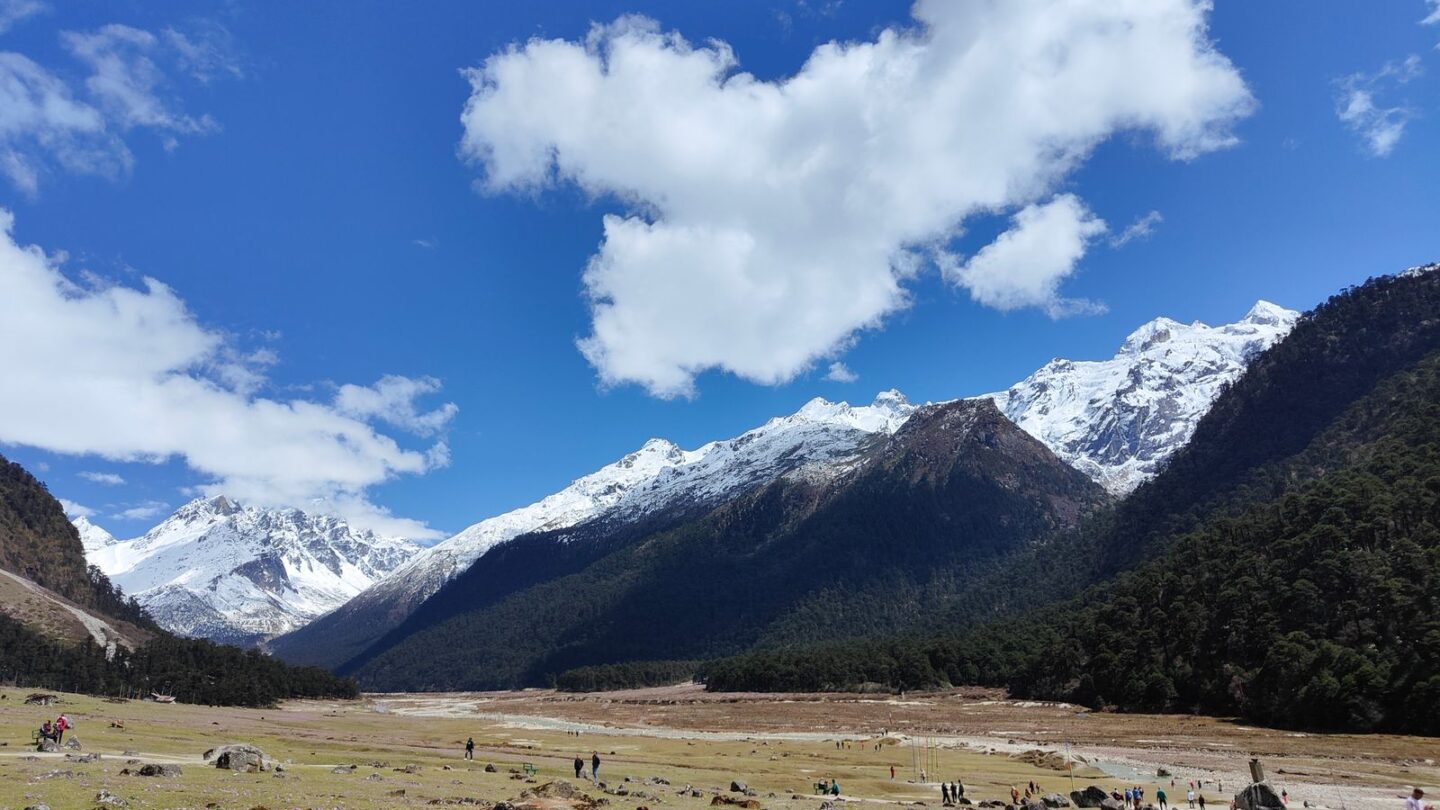
Yumthang Valley is a high meadow in North Sikkim at about 3,564 m, roughly 25 km north of Lachung and around 140 to 150 km from Gangtok. Known as the Valley of Flowers of Sikkim, it bursts with rhododendrons from about April to May and turns white with snow in winter. Indian visitors need a Protected Area Permit, which registered tour operators arrange, usually as part of a two-night Lachung trip.
The valley lies along the Lachung river, close to the Tibet border, within the Shingba Rhododendron Sanctuary area. Most visitors to Yumthang Valley sleep in Lachung and drive up at dawn, often adding Zero Point (Yumesamdong) higher up. Road access has been disrupted several times since the October 2023 Teesta flood, so always check the latest status first.
Key takeaways
- Yumthang Valley sits at about 3,564 m in Mangan (North Sikkim) district, around 25 km beyond Lachung.
- A Protected Area Permit is compulsory; operators apply for it with your photo ID, and Aadhaar is not accepted.
- April and May are the main rhododendron months; December to February bring snow and possible road closures.
- Zero Point lies roughly 20 to 25 km beyond the valley and costs extra per vehicle.
- Lachung, Yumthang and Zero Point reopened to tourists on 8 September 2025 after a closure from late May.
Yumthang Valley at a glance
| Detail | Information |
|---|---|
| Location | North of Lachung, Mangan district, Sikkim |
| Altitude | About 3,564 m (11,693 ft) |
| Distance from Lachung | About 24 to 26 km, 1 to 1.5 hours |
| Distance from Gangtok | About 140 to 150 km |
| Base town | Lachung, at roughly 2,700 to 2,900 m |
| Permit | Protected Area Permit via a registered operator |
| Nearby protected area | Shingba Rhododendron Sanctuary |
| Flower season | Roughly late March to May, peak April to May |
| Snow season | Roughly December to February, sometimes into March |
| Add-on | Zero Point (Yumesamdong), extra charge |
| Typical trip | 2 nights, 3 days from Gangtok |
Why Yumthang Valley is called the Valley of Flowers
Yumthang Valley earns its nickname in spring. Rhododendron bushes and trees cover the slopes in red, pink, white and yellow. Meanwhile, primulas, poppies and other alpine flowers carpet the meadows along the river.
The surrounding Shingba Rhododendron Sanctuary was set up in 1984 to protect these forests. Sources count anywhere from about two dozen to roughly 40 rhododendron species in and around the sanctuary. Additionally, it shelters Rhododendron niveum, Sikkim’s state tree. Note that the state flower is the noble orchid, not the rhododendron.
Outside the bloom, the valley still impresses. Yaks graze on open grassland in summer, and snow peaks frame the valley on clear mornings. In contrast, winter turns the meadows into a white field that draws snow-seekers from the plains.
Yumthang Valley permit rules
The valley lies in a protected border zone. Therefore, every visitor to Yumthang Valley needs a Protected Area Permit (PAP) issued for the Lachung–Yumthang–Yumesamdong axis. Our Sikkim permit guide explains the full system across the state.
For Indian citizens
- Book a North Sikkim trip with a Sikkim-registered tour operator or taxi union.
- Share scans of a valid photo ID and passport-size photos.
- The operator applies for the permit, usually a day before departure.
- Your driver carries the permit and shows it at each check post.
Accepted IDs include a passport, voter ID, driving licence or central or state government ID. However, Aadhaar is not accepted for the PAP, and PAN cards are also not treated as valid. Carry at least two recent photos per person, plus photocopies. Children should carry a birth certificate or passport.
For foreign nationals
The Sikkim Tourism and Civil Aviation Department lists Lachung, Yumthang and Yumesamdong among the North Sikkim areas open to foreigners. Foreigners must first hold a Restricted Area Permit, applied for online on the e-FRRO portal before entering Sikkim. They then need a PAP, which requires a group of at least two and a registered travel agency.
Some travel blogs say foreigners cannot go beyond Yumthang to Zero Point. The state’s official permit page lists Yumesamdong as open to foreigners, but confirm with your agency, because army instructions can change access on the day.
| Traveller | Permit needed | How to apply | Notes |
|---|---|---|---|
| Indian citizen | Protected Area Permit | Registered operator | Passport, voter ID, driving licence or govt ID |
| Foreign national | RAP plus PAP | e-FRRO for RAP; agency for PAP | Group of two or more |
| Children | PAP with parent’s group | Operator | Birth certificate or passport |
| Sikkim residents | Local rules apply | Local authorities | Check with district office |
Yumthang Valley in 2026: road status after the Teesta flood
North Sikkim has faced repeated disruption since October 2023. That month, a flash flood in the Teesta valley destroyed roads and bridges across the region. Consequently, tourism in the Lachung and Lachen valleys opened and closed several times.
| Date | Update |
|---|---|
| October 2023 | Teesta flash flood damages roads and bridges in North Sikkim |
| Late May 2025 | North Sikkim tourism halted after natural calamities |
| 8 September 2025 | Permits resume for Lachung, Yumthang Valley and Zero Point |
| April 2026 | Landslide cuts off Lachen; Lachung side reported open |
| 10 September 2026 | Mangan order: tourist vehicles must cross Toong check post by 4 pm |
| September 2026 | Lachen reopens; Lachung and Yumthang open with timing rules |
The Toong timing rule applies in both directions, so drivers plan departures around it. Moreover, travel after dark is strongly discouraged on these roads. The situation can change within hours after heavy rain. Therefore, confirm the current status with your operator before paying for a package, and keep a buffer day.
How to reach Yumthang Valley
There is no airport or railhead near Yumthang Valley. Most travellers fly into Bagdogra or take a train to New Jalpaiguri, then drive to Gangtok. North Sikkim tours start from Gangtok.
| Leg | Approx. distance | Approx. time | Notes |
|---|---|---|---|
| Bagdogra or NJP to Gangtok | About 120 to 125 km | 4 to 5 hours | Hill road via Rangpo |
| Gangtok to Lachung | About 115 to 125 km | 6 to 8 hours | Via Mangan and Chungthang; diversions possible |
| Lachung to Yumthang Valley | About 24 to 26 km | 1 to 1.5 hours | Early morning start |
| Yumthang to Zero Point | About 20 to 25 km | 1 to 1.5 hours one way | Rough, high road; extra charge |
Self-drive is generally not allowed in North Sikkim. As a result, visitors use a registered local vehicle, either on a shared seat or a reserved car. Drivers usually leave Lachung between about 5 am and 6 am, because clouds often roll in by late morning.
Things to see in and around Yumthang Valley
Shingba Rhododendron Sanctuary
The road from Lachung climbs through the sanctuary before reaching the open valley. In spring, rhododendron forest lines the route. Stop only at safe pull-offs, and do not pick flowers.
Yumthang hot spring
A sulphur hot spring sits near the valley, close to the Lachung river. Accounts differ on its exact distance from the main meadow. Many visitors soak their feet, although facilities are basic. Similarly, you should avoid long soaks at this altitude.
Riverside meadows and yaks
The Yumthang Valley floor offers easy walks along the river and wide views of the peaks. Yaks often graze nearby, and local vendors may offer yak rides. Additionally, small tea stalls sell noodles, tea and snacks in season.
Zero Point (Yumesamdong)
Zero Point sits at roughly 4,600 to 4,800 m, where the motorable road ends near the border. It usually holds snow for much of the year. However, it costs extra and adds altitude risk, so decide on the day.
Lachung village and monastery
Lachung sits on the Lachung river, which meets the Lachen river downstream at Chungthang to form the Teesta, and its monastery lies a short walk above town. Spend your arrival evening here, walking slowly to help acclimatisation.
Best time to visit Yumthang Valley
The right month depends on what you want to see. Flowers peak in spring, while snow draws visitors in winter. For a regional overview, see our guide to the best time to visit Northeast India.
| Months | What to expect | Road access |
|---|---|---|
| March | Early blooms, lingering snow, cold nights | Usually open; snow possible |
| April to May | Peak rhododendron season, busiest period | Generally good; book early |
| June to September | Green meadows, rain, cloud | Landslide risk; closures possible |
| October to November | Clear skies, golden grass, cold mornings | Generally good |
| December to February | Snow-covered valley, very cold | Heavy snow can shut the road |
Bloom timing shifts from year to year with weather. Consequently, late snowfall can delay the flowers into mid-May. In winter, snow sometimes blocks the road to Yumthang Valley or Zero Point for days.
Zero Point add-on: cost and tips
Standard North Sikkim packages usually cover Lachung and Yumthang Valley only. Zero Point is an optional extension, and operators charge extra for it per vehicle. Travel blogs cite figures of around ₹3,000 to ₹4,000 per vehicle, but rates vary by season and union.
- Ask in advance whether your package includes Zero Point.
- Confirm the extra charge in writing before you leave Gangtok.
- Start very early, because the extension adds two to three hours.
- Watch for symptoms such as headache, dizziness or breathlessness at 4,600 m or more.
- Skip it with infants, elderly travellers or anyone unwell.
Typical Yumthang Valley itinerary and costs
A standard North Sikkim package covers Lachung and Yumthang Valley in two nights and three days. Operators also offer longer combined trips that add Lachen and Gurudongmar Lake.
| Day | Plan | Night stay |
|---|---|---|
| Day 1 | Gangtok to Lachung, with waterfall stops en route | Lachung |
| Day 2 | Dawn drive to Yumthang Valley, optional Zero Point, return to Lachung | Lachung |
| Day 3 | Lachung to Gangtok | Gangtok |
Some operators run a one-night version, driving back to Gangtok on the second afternoon. However, that plan is tiring and leaves less margin for the Toong deadline. For the other valley, read our Gurudongmar Lake guide.
Rough budget
Costs depend on season, vehicle and hotel category. As a rough guide, 2025 operator listings quote shared seats from Gangtok to Lachung at about ₹1,500 to ₹1,800 for a one-night trip. Similarly, a reserved SUV for the same trip runs to several thousand rupees. Packages with hotels and meals cost more. Also budget for Sikkim’s ₹50 tourist fee, which hotels collect.
Packing and safety tips for Yumthang Valley
- Carry layers, including a down jacket, gloves and a warm cap, even in May.
- Wear waterproof shoes with good grip for wet or snowy meadows.
- Bring sunglasses and sunscreen, since UV is strong at 3,500 m.
- Keep cash, as card and UPI coverage is patchy beyond Mangan.
- Stay hydrated and avoid alcohol on the first night in Lachung.
- Carry original IDs used for the permit through the whole trip.
- Respect the sanctuary by leaving flowers, plants and litter untouched.
Mobile networks can be weak in Lachung and Yumthang Valley. Therefore, share your itinerary with family before leaving Gangtok. If you plan more protected sites in East Sikkim, add our Tsomgo Lake guide and Nathula Pass guide to your reading.
Frequently asked questions
What is the altitude of Yumthang Valley?
Yumthang Valley sits at about 3,564 m, or roughly 11,700 ft, above sea level. That is noticeably higher than Lachung, the base town, at around 2,700 to 2,900 m. Zero Point, further up the same road, reaches roughly 4,600 to 4,800 m. Walk slowly, drink water and watch for signs of altitude sickness.
How far is Yumthang from Lachung and Gangtok?
Yumthang lies about 24 to 26 km north of Lachung, a drive of one to one and a half hours. From Gangtok, the valley is roughly 140 to 150 km away via Mangan and Chungthang. Road diversions after landslides can change distances and times, so plan with your operator’s current route.
Do I need a permit for Yumthang?
Yes. Every visitor needs a Protected Area Permit because the valley lies in a border zone. Indian citizens get it through a registered Sikkim tour operator using a passport, voter ID, driving licence or government ID. Aadhaar is not accepted. Foreigners need an online Restricted Area Permit first, then a group PAP through an agency.
When do rhododendrons bloom in Yumthang?
Rhododendrons usually bloom from about late March to May, with April and early May often the richest period. Timing varies with snow and temperature each year. Late cold spells can push the peak into mid-May. Ask your operator or Lachung hotel about the bloom before fixing dates if flowers are your main goal.
Can I see snow in Yumthang?
Yes. Snow usually covers the valley from about December to February, and sometimes into March. Zero Point, higher up, often holds snow for longer. However, heavy snowfall can close the road for days in winter. Plan a flexible itinerary and keep a buffer day if snow is the main reason for your trip.
Is Zero Point included in a Yumthang package?
Usually not. Most standard packages cover Lachung and the valley, while Zero Point (Yumesamdong) costs extra per vehicle. Blogs quote roughly ₹3,000 to ₹4,000 per vehicle, but rates vary. Confirm the price in writing before departure, and skip the extension if anyone in your group feels unwell at altitude.
Is North Sikkim open to tourists in 2026?
Yes, with conditions. Lachung, Yumthang and Zero Point reopened in September 2025, and Lachen reopened in September 2026. A Mangan district order requires tourist vehicles to cross the Toong check post by 4 pm in both directions. Conditions change quickly after rain, so confirm the current status with your operator before booking.
Plan your Yumthang Valley trip around the seasons
Yumthang Valley rewards travellers who plan around weather, permits and road rules. Choose April or May for rhododendrons, or winter for snow, and sort your permit through a registered operator. Keep a buffer day, respect the Toong timing and start from Lachung at dawn. Finally, check the inner line permit guide if your trip continues into other Northeast states.
Discover more trip ideas in Northeast Travel or visit the Frontier News homepage.
Related guides
More in Northeast Travel →
Northeast Travel
Kaziranga Safari Booking 2026: Jeep and Elephant Safari Guide
Northeast Travel
Tawang Travel Guide: Monastery, Lakes, Permits and Itinerary
Northeast Travel